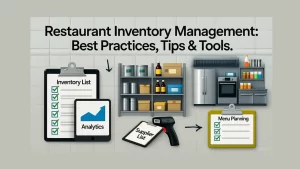


Profitability is the #1 concern for any restaurant owner. Let’s be honest: running a restaurant is a labour of love. But passion alone doesn’t pay the bills. For many restaurant owners in Delhi NCR, the difference between a thriving business and a struggling one often boils down to one crucial metric: profit margin.
It’s a term that gets thrown around a lot, but what does it actually mean for a restaurant’s health? The team at Kriaan, a leading restaurant consultancy in Delhi, breaks it down in plain language, offering a clear-eyed view of how to understand, analyze, and ultimately improve your bottom line.
Gross vs. Net: The Two Margins That Matter
First, it’s essential to know that not all profit is created equal. Restaurants operate with two primary margin figures:
- Gross Profit Margin: This is your revenue from sales minus the direct cost of the goods sold (CoGS)—essentially, your food and beverage costs. It shows how efficiently you’re producing your menu items.
*Formula: (Revenue – CoGS) / Revenue x 100*
- Net Profit Margin: This is the real bottom line. It’s what remains after all expenses are paid: food costs, labour, rent, utilities, marketing, insurance, and even that monthly subscription for the music playlist. This number tells you if your business is truly profitable.
*Formula: (Net Profit / Revenue) x 100*
A common benchmark in the industry is to aim for a net profit margin between 10-15%. However, in a competitive market like Delhi NCR, even achieving a consistent 10% is a significant accomplishment.
The Levers of Profitability: What a Consultant Actually Looks At
So, how does a restaurant consultant help nudge these numbers in the right direction? They don’t just look at the final number; they diagnose the entire operation. Here’s a breakdown of the key areas they analyze:

1. The Food Cost Conundrum
Food cost is typically the largest expense, ideally sitting between 28-35% of your total sales. If it’s higher, a consultant will investigate:
- Portion Control: Are plates consistently sized, or is there creeping “portion inflation”?
- Inventory Waste: How much food is thrown away due to over-ordering, spoilage, or inefficient kitchen prep?
- Supplier Relationships: Could you negotiate better prices without sacrificing quality? Are you comparing vendors regularly?
- Theft & Pilferage: Is inventory mysteriously disappearing?
2. Menu Engineering: Your Secret Weapon
Your menu is not just a list of dishes; it’s a strategic profit map. Consultants use menu engineering to:
- Identify Stars & Dogs: Which dishes are highly profitable and popular (Stars)? Which are low-profit and slow-moving (Dogs)?
- Guide Customer Choice: Using strategic placement, imagery, and descriptions to subtly promote your most profitable items.
- Optimize Pricing: Are your prices aligned with the perceived value, ingredient cost, and what the Delhi NCR market will bear? A common mistake is under-pricing signature dishes.
3. Labour Efficiency: The Balancing Act
Labour costs often consume 25-30% of revenue. The goal isn’t to cut staff but to optimize their time. Key questions include:
- Scheduling: Are you overstaffed on slow Tuesday lunches and understaffed on busy Saturday nights?
- Cross-Training: Can your staff perform multiple roles efficiently during peak times?
- Productivity: Are processes streamlined to minimize wasted time and movement?
4. The Often-Forgotten “Other Costs”
Rent, utilities, and maintenance can silently eat into profits. A fresh pair of eyes might ask: Can you renegotiate your lease? Are there energy-efficient appliances that could lower your power bill? Is preventative maintenance saving you from costly repairs later?
A Restaurant Consultant’s Approach: From Diagnosis to Prescription

Imagine a popular Delhi gastropub with great reviews but stagnant profits. A consultant from Kriaan Enterprises would:
- Analyze the P&L Statement: They’d identify that the net profit margin is only 6%.
- Dig into the Data: They discover the food cost is at 38%, well above the ideal range.
- Observe Operations: They notice a lack of standardized recipes, leading to inconsistent portions and high waste. They also spot that two high-cost, low-seller dishes are taking up prime real estate on the menu.
- Implement Solutions: They might:
- Introduce standardized recipe cards for consistency.
- Work with the chef to re-engineer the menu, highlighting profitable favourites and retooling the slow-moving dishes.
- Help renegotiate with a meat supplier.
- Train staff on portion control and waste tracking.
Within a few months, these targeted actions could bring the food cost down to 32%, directly boosting the net profit margin into double digits.
For Instant Query Call us at : +91 8588 999 885 / 999 999 3775 — Or — Email us at : [email protected]
The Bottom Line
Understanding your profit margins is the first step toward building a resilient and successful restaurant business. While the math is simple, the process of influencing those numbers is complex and requires expertise.
If looking at your financial statements feels overwhelming, you’re not alone. This is precisely where the objective analysis and experience of restaurant consultants in Delhi like Kriaan become invaluable. They provide the clarity and strategic direction needed to turn your passion into a lasting, profitable enterprise.
Ready to see a breakdown of your restaurant’s potential? The team at Kriaan offers comprehensive financial audits and profitability plans designed for the unique dynamics of the Delhi NCR market. Reach out for a confidential consultation today.