
The Power of a Well-Designed Restaurant Layout
When it comes to running a successful restaurant, layout design is not just about aesthetics — it’s about efficiency, functionality, and flow. An intelligently planned layout can improve customer experience, streamline kitchen operations, and even increase your daily turnover.
Whether you’re setting up a fine-dining restaurant in Delhi, a casual café in Bangalore, or a quick-service outlet in Mumbai, your restaurant layout directly impacts everything — from staff productivity to customer satisfaction.
In this article, we’ll explore how to design an efficient restaurant layout for operations, covering layout types, space planning, workflow optimization, and expert design tips.
1. Why Restaurant Layout Design is the main key
A restaurant’s layout isn’t just a visual blueprint — it’s a strategic foundation that determines how smoothly your operations run.
Key Benefits of an Efficient Layout:
- ✅ Faster service: Waiters and chefs move with minimal obstruction.
- ✅ Improved customer comfort: Well-spaced tables and smooth traffic flow.
- ✅ Higher revenue: More efficient table turnover and seating optimization.
- ✅ Safety compliance: Clear emergency exits and unobstructed pathways.
- ✅ Better ambiance: Seamless blend of functionality and design aesthetics.
For example, Kriaan Enterprises recently redesigned a restaurant interior in Gurugram, where optimizing the kitchen flow reduced food preparation time by 20%, boosting customer satisfaction and staff efficiency.
2. Understanding Restaurant Layout Basics
Before diving into design ideas, it’s essential to understand the key zones that make up an efficient restaurant layout.
| Area | Purpose | Design Consideration |
| Entrance & Waiting Area | Creates first impression | Attractive signage, ambient lighting, and comfortable seating |
| Dining Area | Main customer space | Efficient table placement and clear pathways |
| Kitchen & Prep Zone | Core of operations | Easy access for servers, ergonomic workflow |
| Bar / Beverage Counter | Add-on service area | Visibility, access to dining area, proper plumbing and power |
| Restrooms | Essential utility space | Easy to locate but away from dining |
| Storage & Back Office | Staff use | Adequate shelving and safety compliance |
Each of these zones must be strategically positioned to minimize cross-traffic and maximize operational flow.
3. Types of Restaurant Layouts
Different restaurant types call for different layouts. Here are the most common ones used in the industry:
A. Linear or Assembly Line Layout
Perfect for quick-service restaurants (QSRs) and fast food outlets.
- Workflow moves in a straight line from food prep → cooking → serving.
- Minimal cross-traffic and high speed of service.
Example: Subway and Domino’s.
B. Zone Layout
Each department (grill, dessert, cold prep) is in its own “zone.”
- Ideal for large kitchens with specialized staff.
- Easier supervision and equipment access.
C. Island Layout
Cooking appliances are placed in a central “island,” surrounded by prep tables.
- Best for show kitchens or open kitchens.
- Allows visual interaction between chefs and customers.
D. Open Kitchen Layout
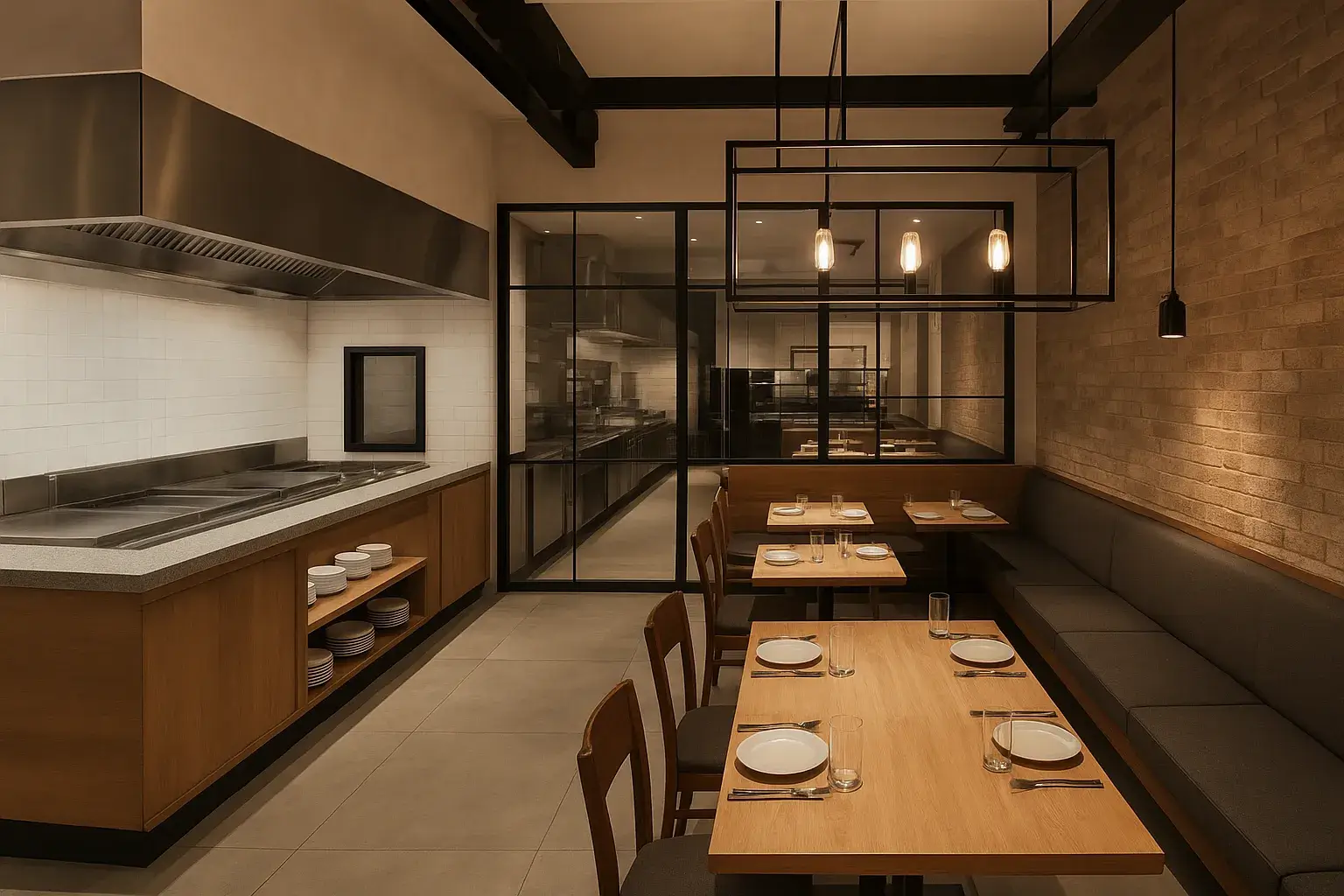
A transparent kitchen setup that lets customers see the cooking process.
- Builds trust and enhances the dining experience.
- Requires noise and odor control through ventilation design.
E. Ergonomic Layout
Designed for efficiency and movement.
- Reduces unnecessary steps.
- Enhances staff comfort and productivity.
4. Key Principles for Designing an Efficient Layout
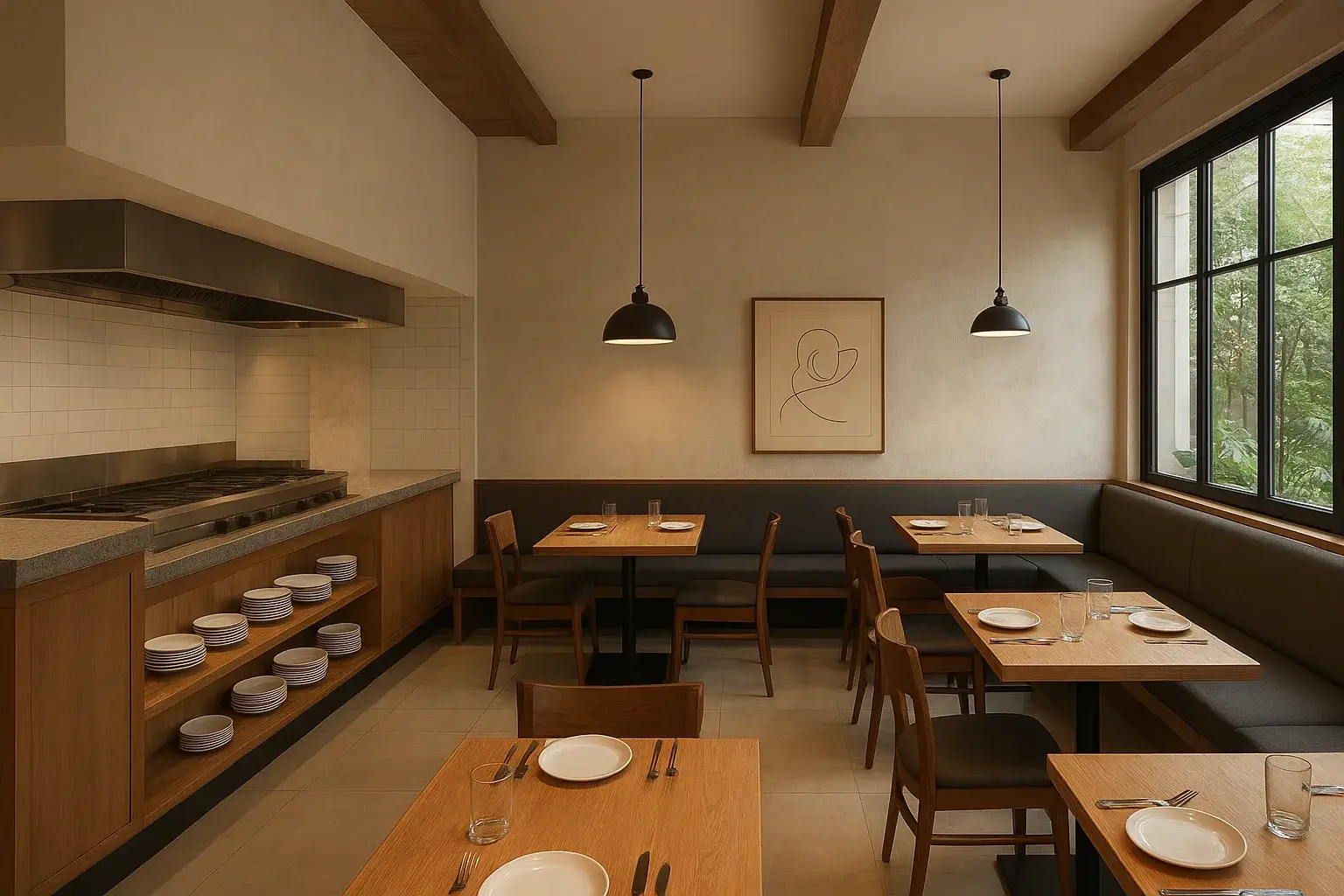
An effective restaurant layout balances aesthetics and practicality. Here are the principles professionals follow:
1. Optimize Space Utilization
Use every square foot efficiently.
- For fine dining: 18–20 sq. ft per person
- For casual dining: 12–15 sq. ft per person
- For QSRs: 10–12 sq. ft per person
2. Maintain Logical Flow
The path from kitchen → service counter → table → billing should be uninterrupted.
3. Prioritize Visibility and Accessibility
- The kitchen should be accessible to servers but not visible unless it’s an open design.
- Emergency exits and restrooms should be clearly marked.
4. Acoustic and Lighting Design
Use soft lighting and acoustic panels to enhance ambiance without creating noise disturbance.
5. Hygiene and Safety
- Keep storage and waste zones away from food prep areas.
- Ensure easy cleaning and pest control access.
5. Designing the Kitchen for Maximum Efficiency
The kitchen is the engine of your restaurant — a poorly planned kitchen can slow down the entire operation.
Best Practices for Kitchen Layout Design:
- Work Triangle Principle: Place cooking, washing, and prep zones within short distance.
- Separate Hot & Cold Areas: Avoid overlap to maintain food safety.
- Ample Ventilation: Install exhaust hoods and ducts to control heat and odor.
- Efficient Equipment Placement: Keep fryers, ovens, and sinks within easy reach.
- Proper Storage: Include separate areas for dry goods, refrigeration, and utensils.
Example: In a restaurant layout in greater Noida (Carnivale) designed by Kriaan Enterprises, separating the washing and prep zones reduced staff congestion by 30% during peak hours.
6. Dining Area Design: Balancing Comfort and Capacity
The dining area reflects your brand’s personality and influences the customer experience.
Tips for Designing the Dining Area:
- Use zoning to create private corners and group seating.
- Keep at least 4–5 feet between tables for smooth movement.
- Choose furniture that matches the restaurant theme — e.g., rustic for cafés, elegant for fine dining.
- Use warm tones and textures to make spaces inviting.
Seating Arrangement Ideas:
| Restaurant Type | Suggested Seating Style |
| Fine Dining | Booths + Round Tables |
| Casual Dining | Mix of 2-seaters & 4-seaters |
| Café / Bistro | Flexible movable furniture |
| Family Restaurant | Long community tables |
7. Enhancing Operational Efficiency Through Layout Design
A great restaurant layout directly improves speed, service, and satisfaction.
Actionable Tips:
- Plan Shorter Routes: Reduce walking time for waiters between kitchen and tables.
- Add Service Stations: Set up small side stations with cutlery, napkins, and POS terminals.
- Optimize Table Turnover: Arrange sections for quick cleanup and reset.
- Use Visual Separation: Partition noisy or crowded areas with design elements.
- Include Smart Technology:
- POS integration near service zones
- Digital menus and QR ordering
- Smart kitchen display systems
8. Real-Life Example: Restaurant Layout Redesign in Delhi NCR
Kriaan Enterprises recently worked on “The Urban Dhaba,” a mid-scale restaurant in Firozabad.
Before:
- The kitchen was located far from the dining zone.
- Waiters had to cross guest pathways.
- Table layout was inconsistent.
After:
- Reorganized kitchen closer to service area.
- Added a central service counter for faster delivery.
- Improved table alignment for 20% more seating capacity.
Result:
Service speed improved by 35%, and customer satisfaction ratings went up significantly.
9. Mistakes to Avoid in Restaurant Layout Design
- ❌ Overcrowding tables to increase capacity.
- ❌ Ignoring ventilation and odor control.
- ❌ Placing restrooms near dining areas.
- ❌ Poor lighting or sound design.
- ❌ Forgetting about accessibility for differently-abled customers.
10. Working with Professional Restaurant Designers
Hiring an experienced restaurant interior designer can help you create a layout that balances aesthetics, compliance, and workflow.
At Kriaan Enterprises, we specialize in:
- Restaurant space planning
- Kitchen layout optimization
- Interior theme design
- Furniture selection and customization
If you’re planning to design or renovate a restaurant, collaborating with professionals ensures style, safety, and success.
Also check our previous post – Kitchen Workflow Design: A Practical Guide to Maximizing Efficiency
12. Frequently Asked Questions (FAQs)
1. What is the best layout for a small restaurant?
For small spaces, a linear or galley-style layout works best as it optimizes movement and minimizes congestion.
2. How much space should I allocate per customer in a restaurant?
Typically, allow 12–20 sq. ft per guest depending on the dining type and furniture setup.
3. What are the key elements of a good restaurant layout?
Efficient workflow, seating comfort, visual balance, proper lighting, and clear access paths.
4. Should the kitchen be visible to customers?
An open kitchen can be a great design feature if your restaurant focuses on transparency and presentation — just ensure noise and odor control.
5. How can layout design improve staff efficiency?
By minimizing walking distances, separating service zones, and positioning prep areas logically, you can enhance workflow speed by up to 30–40%.
6. Who can help me design a restaurant layout in Delhi NCR?
Professional designers like Kriaan Enterprises specialize in restaurant layout planning and execution for operational efficiency and aesthetic appeal.
Conclusion: Layout Design That Drives Success
A well-planned restaurant layout can transform your business. It affects not just how your restaurant looks — but how well it performs. From kitchen flow to customer comfort, every design choice should support your operational goals.
If you’re planning a new restaurant or redesigning an existing one, consult professionals who understand the balance between beauty and functionality — because in hospitality, design isn’t just décor, it’s strategy.