

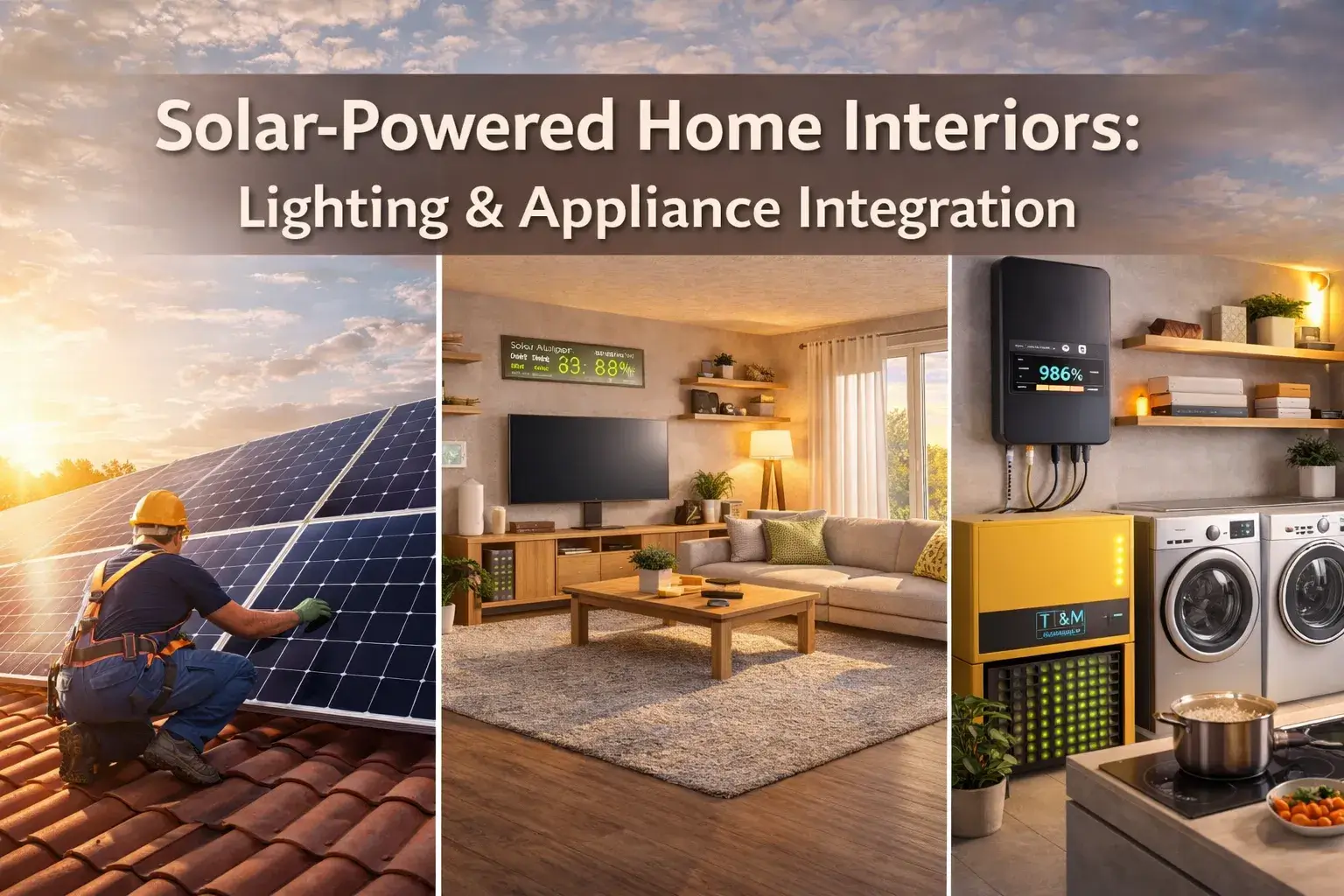
With rising electricity costs and increasing awareness of sustainability, solar-powered home interiors are no longer a luxury—they’re becoming a necessity. Today’s homeowners are not just installing solar panels; they are integrating solar energy into interior design, making homes smarter, more efficient, and future-ready.
From solar lighting systems to energy-efficient appliances, the shift toward renewable energy is reshaping how we design living spaces. But the real challenge lies in seamless integration.
This guide explores how to design solar-powered interiors that are both visually appealing and energy-efficient, with practical tips, layouts, and real-world insights.
Why Solar Integration in Interior Design
Interior design is no longer just about furniture and décor—it now includes energy planning and sustainability.
Key Benefits of Solar-Powered Interiors
- Reduced electricity bills
- Eco-friendly and sustainable living
- Energy independence
- Increased property value
- Future-ready smart home integration
Real-Life Insight
Many modern homes in urban areas are now designed with solar-first architecture, where lighting plans, appliance usage, and even furniture placement are aligned with energy efficiency.
Also read:- Colour Psychology Trends for 2026: What Colours Are Reshaping Modern Homes
Understanding Solar Energy for Home Interiors
Before designing, it’s important to understand how solar energy works in a home.
Basic Solar System Components
| Component | Function |
| Solar Panels | Capture sunlight and convert it into electricity |
| Inverter | Converts DC to usable AC power |
| Battery Storage | Stores excess energy for later use |
| Charge Controller | Regulates power flow |
Types of Solar Systems
- On-grid systems – connected to electricity grid
- Off-grid systems – fully independent
- Hybrid systems – combination of both
For interiors, hybrid systems are ideal, as they provide backup and flexibility.
Solar Lighting Design for Modern Homes
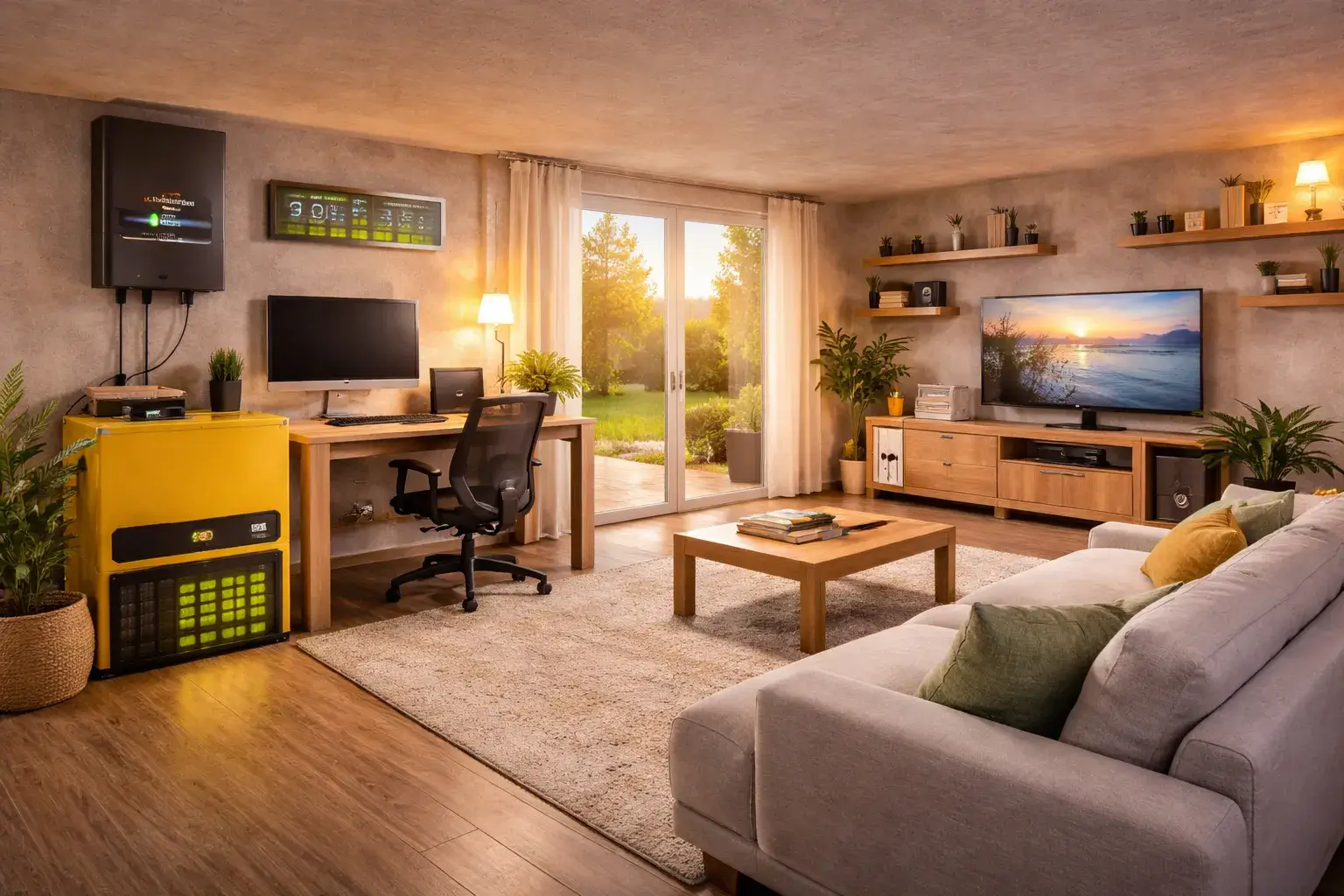
Lighting is the easiest and most impactful way to integrate solar energy into interiors.
Types of Solar Lighting
1. Ambient Lighting
- General illumination for rooms
- Solar-powered LED ceiling lights
2. Task Lighting
- Focused lighting for workspaces
- Desk lamps, kitchen lights
3. Accent Lighting
- Decorative lighting
- LED strips, wall highlights
Best Practices for Solar Lighting Integration
- Use LED lights (consume 75% less energy)
- Maximize natural daylight with large windows
- Install motion sensors and dimmers
- Use warm lighting tones for comfort
Example: Solar Lighting in a Living Room
- Solar-powered LED panel lights for ceiling
- Accent strip lights behind TV unit
- Floor lamp connected to solar backup
This setup ensures low energy consumption without compromising aesthetics.
Also read:- Net-Zero Interiors in India: What They Are & How to Achieve Them on a Budget
Integrating Solar-Powered Appliances
Lighting is just the beginning—true efficiency comes from integrating solar-compatible appliances.
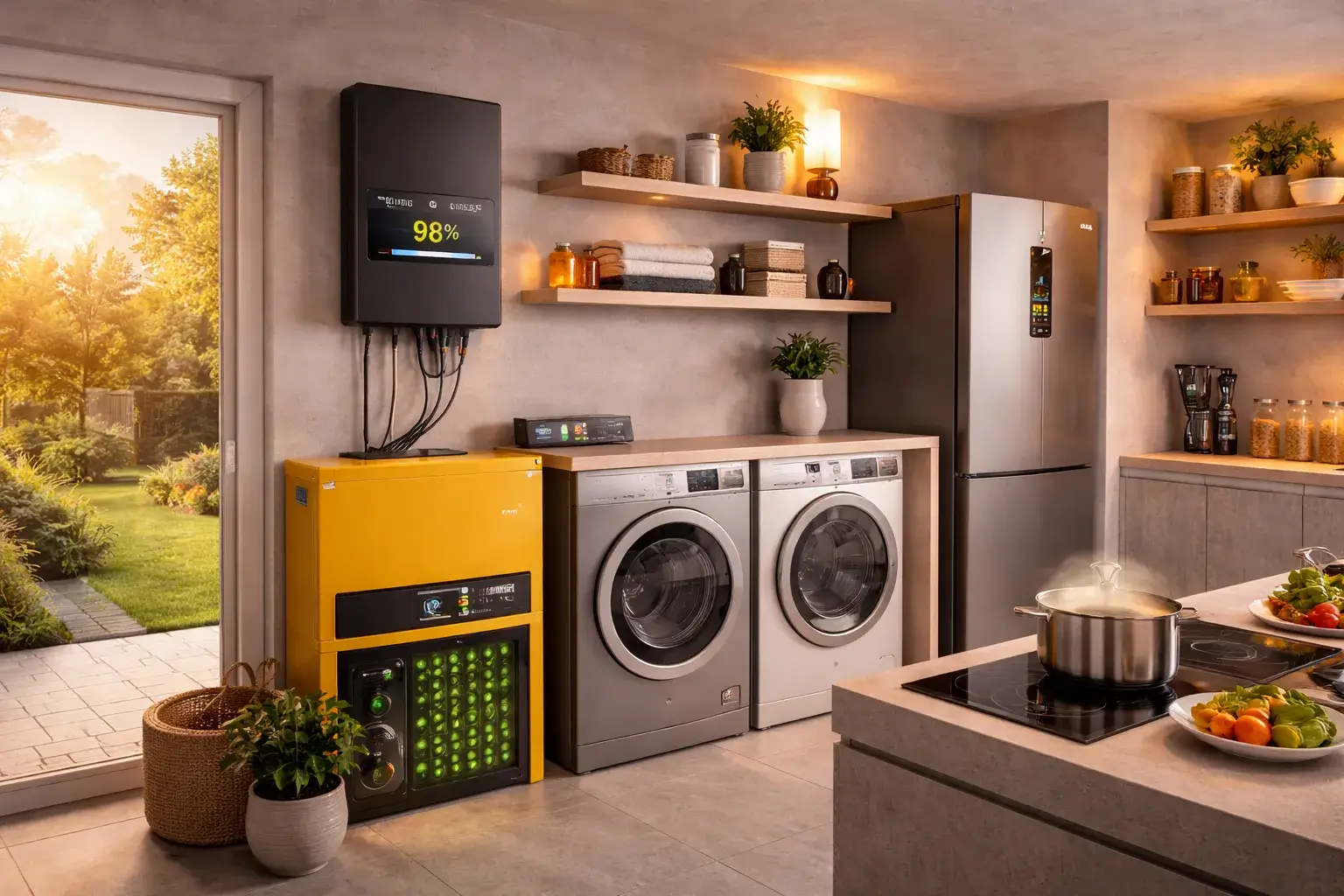
Common Solar-Powered Appliances
| Appliance | Energy Efficiency Tip |
| Refrigerator | Use inverter-based models |
| Washing Machine | Choose low-energy consumption models |
| Air Conditioner | Use solar-compatible inverter AC |
| Fans | Use BLDC fans (65% energy saving) |
| Television | Use LED TVs |
Smart Appliance Integration Tips
- Prioritize high-usage appliances for solar connection
- Use energy rating (5-star appliances)
- Schedule usage during peak sunlight hours
- Use smart home automation systems
Real-Life Example
A 2BHK home using solar integration:
- Solar powers lights, fans, and TV fully
- Refrigerator and washing machine partially
- AC runs on hybrid system
Result: 40–70% reduction in electricity bills
Interior Design Strategies for Solar Homes
Solar-powered interiors require thoughtful planning.
1. Layout Planning
- Place workspaces near natural light
- Use open layouts for better light distribution
- Avoid blocking windows
2. Material Selection
- Light-coloured walls reflect more light
- Use reflective surfaces like glass and mirrors
- Choose sustainable materials
3. Furniture Placement
- Avoid bulky furniture near windows
- Use modular furniture for flexibility
Smart Home + Solar Integration
Modern interiors combine solar power with smart automation.
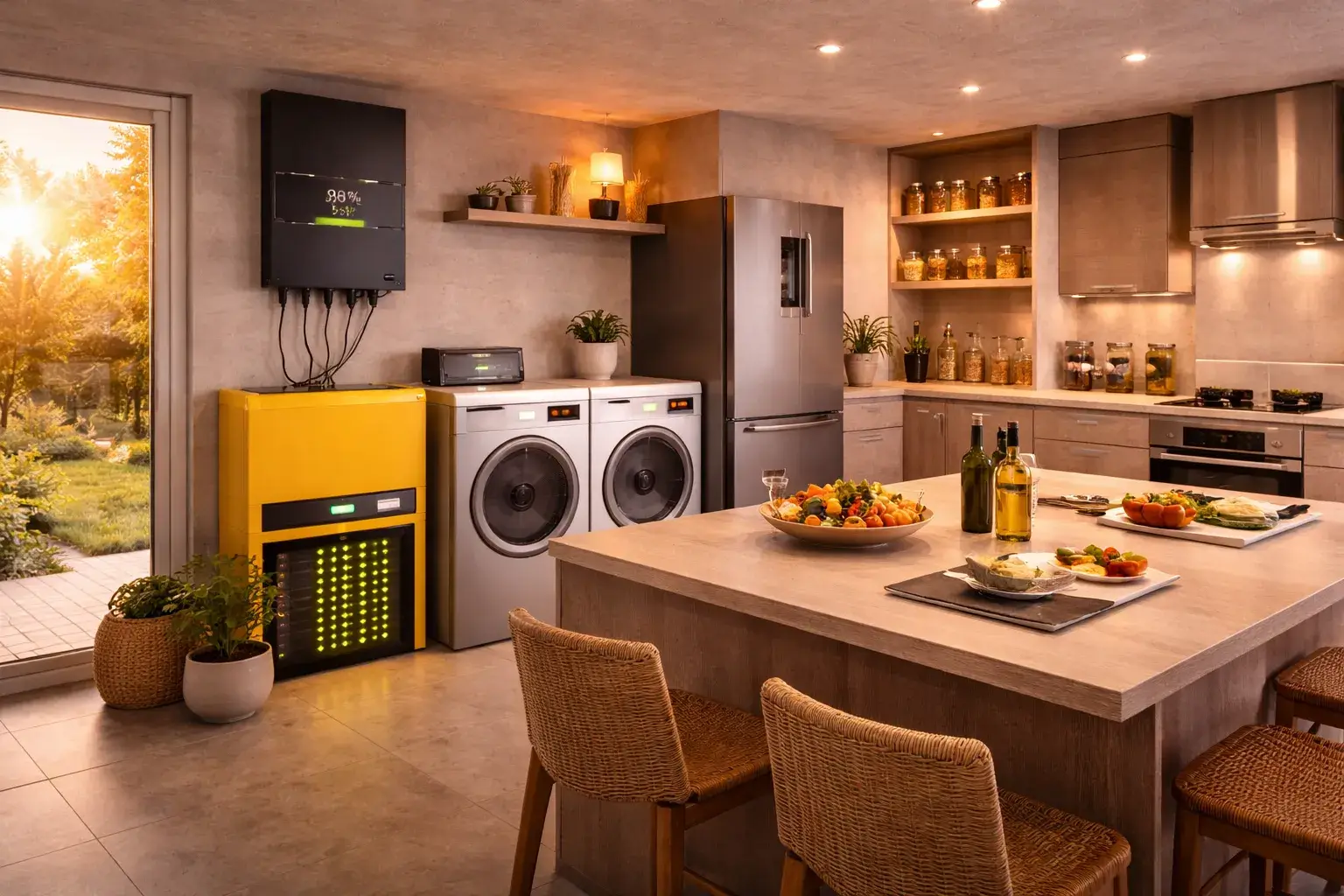
Features to Consider
- Smart lighting control
- Automated curtains
- Energy monitoring systems
- App-based appliance control
This creates a fully optimized energy-efficient home.
Also read:- Designing Multi-Use Balconies for Micro-Apartments: Smart Space-Saving Ideas
Budget Planning for Solar Interiors
Solar integration can be scalable based on budget.
Estimated Cost Breakdown
| Element | Approx Cost (India) |
| Solar Panel System (3kW) | ₹1.5–2.5 Lakhs |
| Battery Backup | ₹50,000–₹1 Lakh |
| LED Lighting Setup | ₹20,000–₹50,000 |
| Smart Automation | ₹30,000–₹1 Lakh |
Budget Tips
- Start with lighting
- Upgrade appliances gradually
- Use government subsidies
- Plan long-term ROI
Common Mistakes to Avoid
- Ignoring battery storage
- Overloading solar system
- Poor lighting design
- Choosing non-efficient appliances
- Lack of professional planning
Actionable Tips for Solar Interior Design
- Start with energy audit of your home
- Use LED + solar combo for maximum efficiency
- Invest in battery backup for reliability
- Combine solar with smart home tech
- Focus on both aesthetics and function
Design Your Solar-Powered Home with Experts
If you’re planning to upgrade your home into a solar-powered, energy-efficient space, professional guidance can make all the difference. As a leading interior designers in India Kriaan Enterprises specialize in designing modern interiors that seamlessly integrate lighting, appliances, and smart energy solutions. Whether it’s a compact apartment or a luxury home, our expert interior designers ensure your space is functional, sustainable, and visually stunning. Let us help you create a future-ready home that blends innovation, comfort, and style.
Frequently Asked Questions (FAQs)
1. What are solar-powered home interiors?
Solar-powered home interiors are spaces designed to use solar energy for lighting, appliances, and daily functions, reducing dependence on traditional electricity.
2. Can solar energy run all home appliances?
Yes, but it depends on system capacity. High-power appliances like ACs require larger or hybrid solar systems.
3. Is solar interior design expensive?
Initial costs can be higher, but it offers long-term savings on electricity bills, making it cost-effective over time.
4. What is the best lighting for solar-powered homes?
LED lighting is the best choice due to low energy consumption and high efficiency.
5. Do I need battery storage for solar homes?
Yes, batteries help store excess energy and provide backup during night or power outages.
6. How can I make my home more energy-efficient?
Use LED lights, energy-efficient appliances, smart automation, and proper insulation to reduce energy consumption.
Conclusion
Solar-powered home interiors represent the future of living—where design meets sustainability. By integrating solar lighting, efficient appliances, and smart technology, homeowners can create spaces that are not only beautiful but also environmentally responsible.
Whether you’re designing a new home or upgrading an existing one, adopting solar solutions will ensure lower costs, higher efficiency, and a greener lifestyle.