

In today’s competitive food and beverage industry, great food alone isn’t enough to stand out. What truly makes a restaurant unforgettable is its brand — the story, personality, and promise it carries. That’s where restaurant branding and positioning become game-changers.
Branding gives a restaurant its identity, while positioning defines how it is perceived in the market. Together, they help restaurants attract the right customers, build loyalty, and grow sustainably.
Whether someone is launching a new concept or refreshing an existing one, this ultimate guide breaks down everything they need to know to build a strong restaurant brand and position it effectively.
🏷️ What Is Restaurant Branding and Why It Matters

Restaurant branding goes far beyond just a name or logo. It’s the complete personality of the restaurant — how it looks, feels, and communicates with its audience. It includes elements like visual identity, brand story, tone of voice, and even the dining experience.
Unlike marketing, which focuses on promotions and visibility, branding is about building a long-lasting identity. A well-defined brand can:
✅ Attract the right audience
✅ Create emotional connections with guests
✅ Build loyalty and trust
✅ Command better pricing in a crowded market
In short, a strong brand turns a restaurant into an experience, not just a place to eat.
📌 Understanding Restaurant Positioning
If branding is the personality, positioning is how the world perceives it. Restaurant positioning defines where a restaurant stands in the minds of its customers compared to competitors.
For example:
- A fine-dining restaurant may position itself as “premium and exclusive.”
- A local café might focus on being “community-driven and cozy.”
- A fast-casual brand could highlight “value and speed.”
Positioning is what makes a restaurant unique in the eyes of customers.
🏆 Real-World Examples of Positioning
- A luxury Carnivale Restauturant & Food Court positions itself as an elegant, intimate escape in Greater Noida.
- A Jungle barbeque jungle theme restaurant that emphasizes sustainability and healthy living.
- A QSR (quick service restaurant) that focuses on speed, affordability, and convenience.
🧭 Step-by-Step Restaurant Branding Strategy

Step 1: Define the Concept and USP
The foundation of every successful restaurant brand is a clear concept and unique selling proposition (USP). It starts with:
- Identifying the target audience (families, professionals, millennials, tourists, etc.)
- Deciding the brand personality (luxury, casual, quirky, fun)
- Determining what makes the brand stand out from competitors
This clarity helps in every branding decision that follows.
Step 2: Craft a Strong Brand Story
Every memorable restaurant has a story behind it. Whether it’s a family recipe passed down for generations or a bold idea to bring global Flavors to a local market, storytelling adds soul to a brand.
A powerful brand story:
- Communicates the why behind the concept
- Builds an emotional connection with customers
- Differentiates the brand in a crowded market
Step 3: Build a Visual Brand Identity
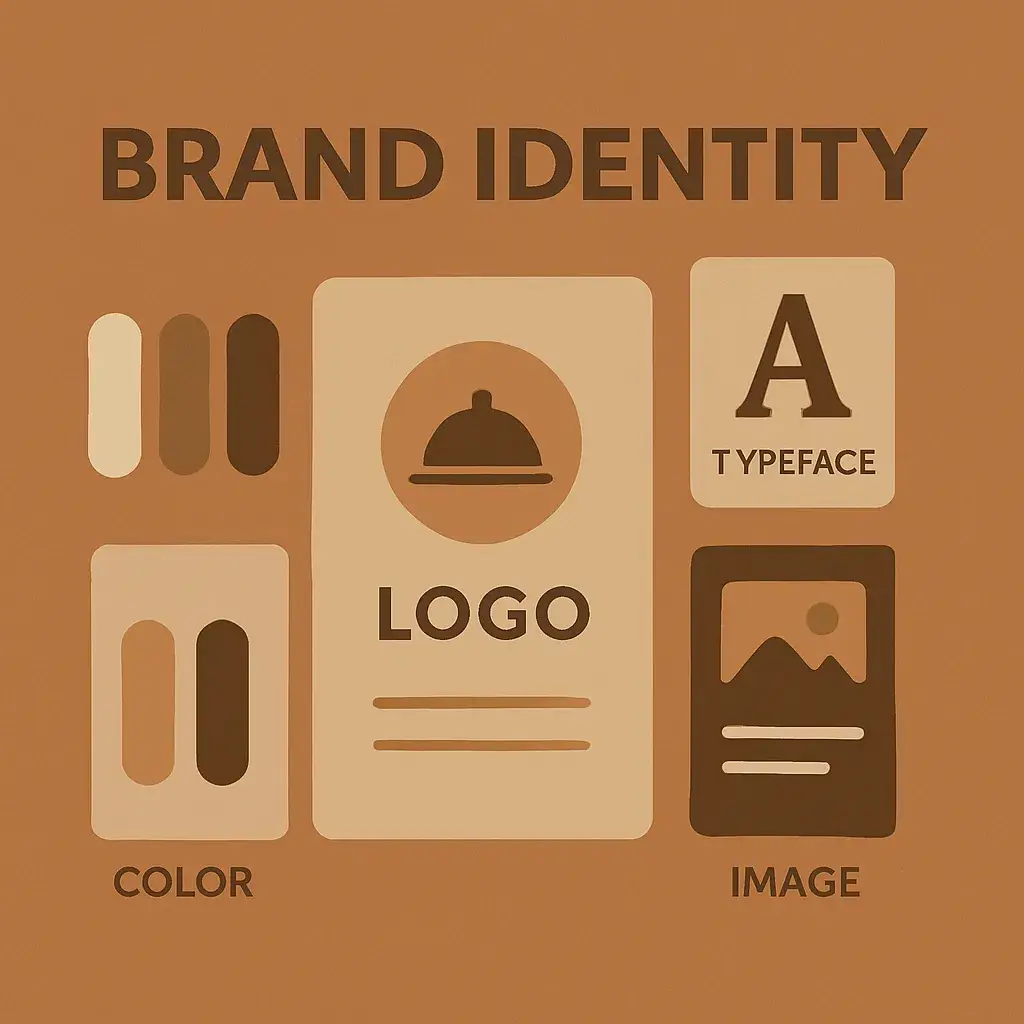
This is where the brand starts taking shape visually. A well-designed visual identity can make a restaurant instantly recognizable. This includes:
- A distinctive logo design
- A consistent colour palette and typography
- A memorable restaurant name and tagline
- Branded menu design and interior décor
Even the smallest design details — like signage, staff uniforms, and packaging — play a role in reinforcing brand consistency.
Step 4: Position the Brand in the Market
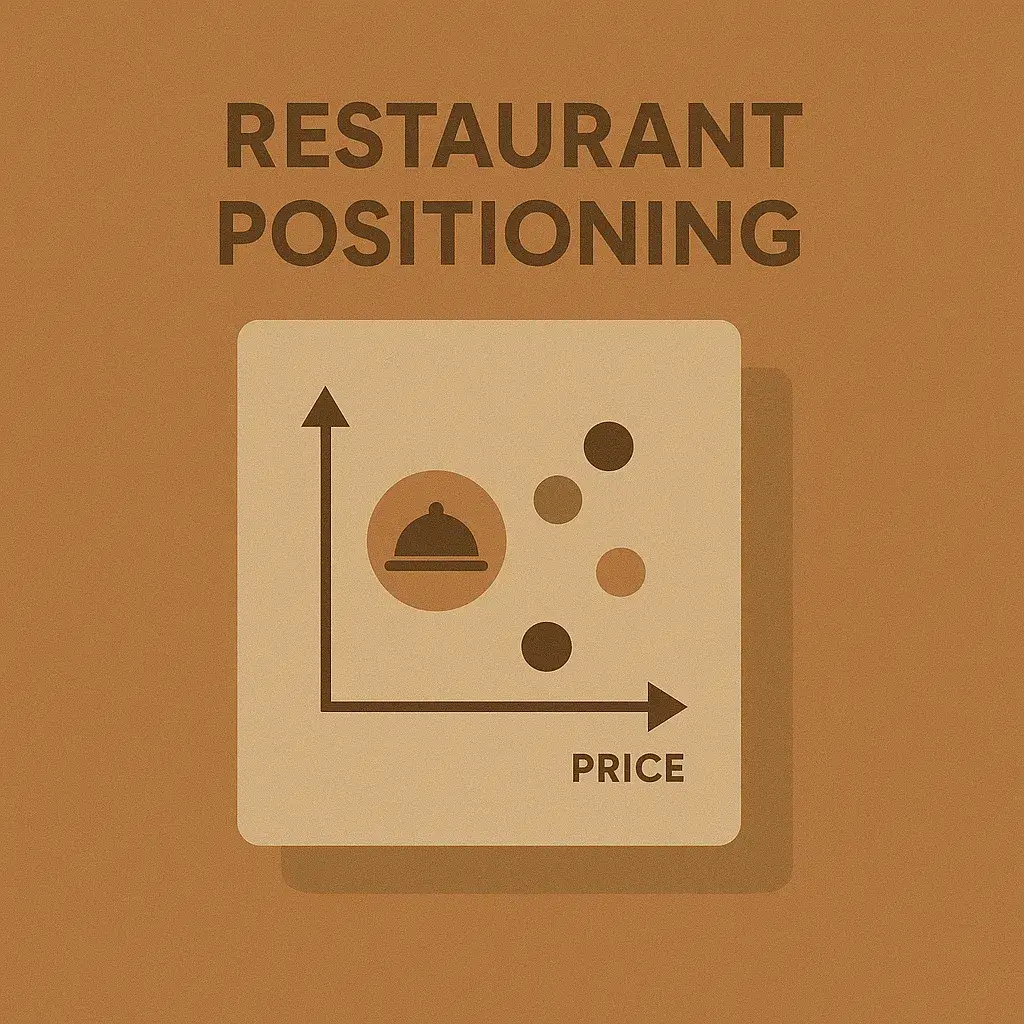
Positioning isn’t guesswork — it’s a strategic decision. A positioning map can help identify where a restaurant fits in the spectrum of price vs. quality or local vs. global appeal.
Steps to position effectively:
- Identify direct and indirect competitors
- Evaluate what they’re known for
- Write a positioning statement that clearly defines the brand’s place in the market
This statement becomes the backbone of all future branding and marketing decisions.
Step 5: Integrate Branding Across All Touchpoints
A great restaurant brand doesn’t live only on paper; it’s experienced at every interaction.
- Website and digital presence should reflect the same tone and style
- Interior, packaging, and signage must be consistent
- Staff should communicate in the brand voice — whether it’s playful, elegant, or professional
Branding works best when it’s cohesive, from the menu design to social media captions.
🚀 Proven Restaurant Positioning Strategies That Work
Positioning strategies differ based on the concept, target market, and location. Here are some effective approaches:
- Niche positioning: e.g., a vegan or gluten-free café targeting health-conscious diners.
- Experience-based positioning: focusing on ambiance and service, like fine dining or themed restaurants.
- Value-based positioning: offering “affordable luxury” or “fast and budget-friendly” experiences.
- Local identity positioning: highlighting regional cuisine, culture, or traditions.
Each strategy should align with the restaurant’s USP and target audience to create a memorable brand perception.
📢 Branding and Marketing Go Hand in Hand
Branding sets the stage; marketing amplifies it. A solid restaurant branding strategy fuels marketing campaigns, making them more effective and recognizable.
Key marketing integrations:
- Social media storytelling: sharing behind-the-scenes stories, chef highlights, and brand values.
- Local SEO optimization: ensuring the brand appears when customers search for restaurants nearby.
- Email marketing and loyalty programs: reinforcing the brand’s personality directly with customers.
💬 Online Reputation & Branding
Online reviews, Google ratings, and customer feedback all shape how a brand is perceived. A strong brand voice can help shape positive perceptions and build trust.
⚠️ Common Restaurant Branding Mistakes to Avoid
Even the best concepts can fail without proper branding. Some frequent mistakes include:
❌ Inconsistent brand messaging across platforms
❌ Copying competitors instead of creating a unique identity
❌ Ignoring the target audience’s preferences
❌ Neglecting staff training on brand tone and experience
Avoiding these pitfalls ensures the brand remains authentic and memorable.
🌟 Real-Life Examples of Strong Restaurant Branding
- Fine-dining brand: Positions itself as premium and exclusive, focusing on personalized service and high-end visuals.
- Fast-casual chain: Highlights speed, convenience, and consistency across multiple outlets.
- Local café: Emphasizes community connection, local ingredients, and warm ambiance.
These examples prove that successful branding isn’t just for global chains — local and independent restaurants can build powerful identities too.
🤝 How Restaurant Consultants Can Help Build a Strong Brand
While some restaurant owners manage branding themselves, many turn to professional restaurant consultants for expert guidance.
A consultant can:
- Help define a strong brand concept
- Craft a unique positioning strategy
- Align the visual identity with the brand story
- Plan a go-to-market strategy for launch or rebranding
Working with a consultant ensures that every branding element is strategically aligned — not just visually appealing. For detailed concept read our previous post Do You Need a Restaurant Consultant? 5 Signs to Hire One
🏁 Final Thoughts — Building a Brand That Lasts
Building a powerful restaurant brand isn’t a one-time task; it’s a long-term commitment. Consistency, storytelling, and clear positioning are key ingredients to creating a memorable experience that customers return to again and again.
In a market where diners have endless choices, branding isn’t just about being seen — it’s about being remembered. AAMAX