
Restaurant Consultants vs. Restaurant Designers
Don’t Confuse The Two – Your Restaurant’s Success Depends On It
You have the perfect restaurant concept and the drive to make it a success. The next step is often the most critical: bringing in the right expert. But do you hire a restaurant consultant or a restaurant designer?
Many use these titles interchangeably, but confusing them is one of the most common and costly mistakes a new restaurateur can make. Hiring a designer when you need a strategist, or vice versa, can set your dream venture back months and thousands of dollars.
This isn’t about just aesthetics or just numbers—it’s about building a business that is both profitable and irresistible. Understanding the distinct roles of these experts is the first real step toward opening your doors. Let’s break down the difference so you can assemble the perfect team.
The Core Difference: The Analogy of Soul vs. Body
Imagine building a person. You need both a conscious mind and a physical body. One cannot function without the other.
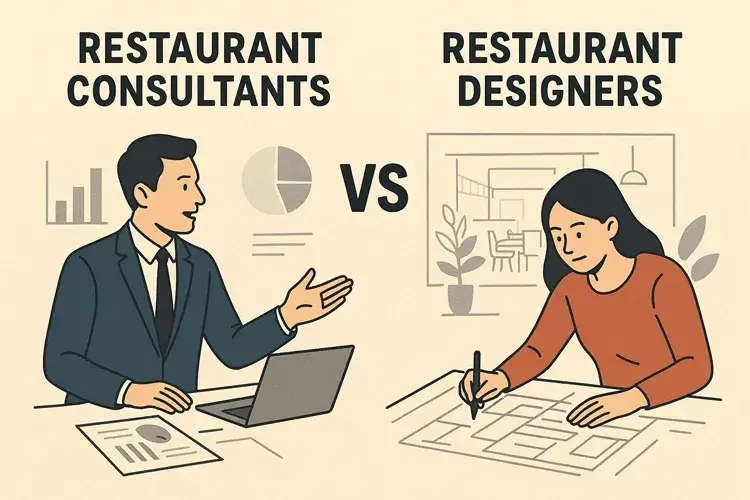
- The Restaurant Consultant is the SOUL (The Business Brain). They focus on the strategy, operations, and financial viability of the restaurant. They are the architects of the business model, asking the essential question: “Will this restaurant make money?”
- The Restaurant Designer is the BODY (The Creative Eye). They focus on the aesthetics, customer experience, and physical space. They are the architects of the environment, asking: “What will it feel like to dine in this restaurant?”
A restaurant with a great soul (a solid business plan) but no body (a poorly designed space) will struggle to attract customers. Conversely, a beautiful body with no soul (a stunning restaurant with a flawed operational model) will bleed money. You need restaurant designers & Consultants both for a healthy, successful establishment.
What Does a Restaurant Consultant Do? (The Soul/Brain)
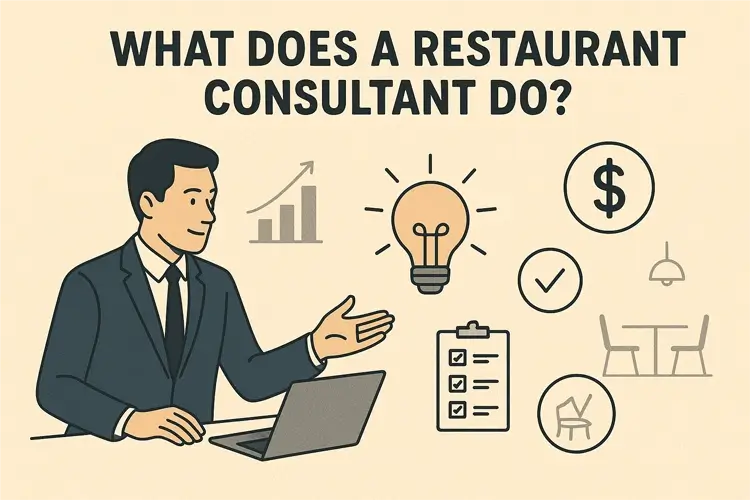
A restaurant consultant’s primary focus is on the behind-the-scenes engine that makes the business run. They are hired to build a foundation for profitability and efficiency.
Their key responsibilities often include:
- Concept & Market Analysis: They help refine a vague idea into a viable concept. This involves identifying a target audience, analyzing competitors, and ensuring there’s a market for the idea.
- Financial Planning: This is a huge part of their job. They create detailed budgets, financial projections (called pro formas), and pricing strategies to ensure menu items are profitable.
- Menu Engineering: A restaurant consultants doesn’t just help choose dishes; they design the menu for maximum profit (through food cost analysis) and kitchen efficiency, ensuring the offerings can be executed smoothly.
- Operational Systems: They develop Standard Operating Procedures (SOPs) for everything from how a server greets a table to how inventory is managed. This creates consistency and efficiency.
- Vendor Sourcing: They use their industry connections to help owners negotiate with and select the best suppliers for food, equipment, and point-of-sale (POS) systems.
- Marketing Strategy: They assist in crafting pre-launch marketing plans and grand opening strategies to build buzz from day one.
You should seriously consider hiring a restaurant consultant if:
- You have a great concept but need a solid business plan to secure funding.
- Your existing restaurant is losing money or is operationally inefficient.
- You are a first-time owner with no industry experience.
- You need data-driven advice on the best location for your concept.
What Does a Restaurant Designer Do? (The Body/Creative Eye)
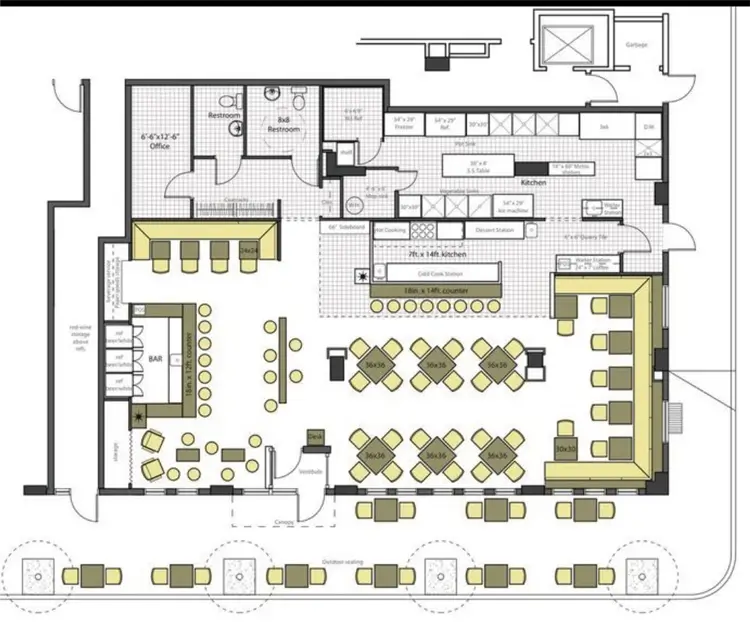
A restaurant designer’s primary focus is on the tangible, sensory experience of the space. They translate the brand’s essence into a functional and beautiful physical environment.
Their key responsibilities often include:
- Space Planning & Layout: This is arguably their most critical task. They design the floor plan to optimize kitchen workflow, server traffic paths, and customer seating—all while maximizing capacity and ensuring compliance.
- Interior Design & Branding: They select every visual element: colour palettes, lighting, furniture, flooring, and decor. Their goal is to create a cohesive brand identity that tells a story the moment a guest walks in.
- Customer Journey: They consciously design the atmosphere through elements like lighting (is it bright and energetic or soft and intimate?), acoustics, and seating comfort to create a specific dining experience.
- FF&E Selection: They source all Furniture, Fixtures, and Equipment, balancing aesthetics with durability, maintenance, and budget.
- Technical Drawings: They create detailed construction documents that architects and contractors use to build the space correctly.
You should hire a restaurant designer when:
- You have a solid business plan and need to transform an empty shell into a functional restaurant.
- Your brand needs a strong, cohesive visual identity.
- You are renovating an existing space to improve flow or update its look and feel.
- You need to ensure your kitchen layout efficiently supports the menu created by you or your consultant.
The Overlap: Where Consultants and Designers Must Collaborate

The lines between these roles are not rigid walls but rather a dotted line where constant communication is vital. The most critical overlap is the kitchen design.
The consultant’s menu (e.g., a wood-fired pizza oven is needed) directly dictates the equipment requirements. The designer must then take that equipment list and integrate it into an efficient and compliant kitchen layout. If these two experts don’t collaborate, you could end up with a beautiful kitchen that can’t functionally execute the menu, or a menu that doesn’t fit the kitchen’s design.
Other key collaboration points include the seating plan (which impacts the consultant’s revenue projections) and the overall customer experience (which is a blend of service style and environmental design). The ideal scenario is to have them work as a team from the very beginning of the project.
Key Questions to Ask Before You Hire
Before signing a contract, ask these questions to ensure you’re finding the right expert for your needs.
For a Restaurant Consultant:
- “Can you show me examples of your financial projections or business plans from past projects?”
- “What is your specific experience with my type of cuisine or concept (e.g., fast-casual, fine dining, bakery)?”
- “What is your process for helping us after we open?”
For a Restaurant Designer:
- “Can I see your portfolio of completed projects?”
- “How do you approach optimizing workflow between the front and back of house?”
- “Can you walk me through how you balance aesthetic choices with durability, maintenance, and budget?”
For Instant Query Call us at : +91 8588 999 885 / 999 999 3775 — Or — Email us at : [email protected]
Conclusion: You Likely Need Both for a Complete Recipe
In the end, a restaurant consultant builds the invisible systems that make your business profitable and sustainable. The restaurant designer creates the visible space that attracts guests and makes them want to return.
For an aspiring restaurateur, the best advice is to honestly assess your own strengths. If you’re a creative visionary, you’ll need a consultant to build your business foundation. If you’re a numbers-driven operator, you’ll need a designer to create an enticing atmosphere. For most first-timers, finding a way to invest in both experts is the safest and most strategic path to success. By building a team with both a soul and a body, you create a restaurant that truly comes to life.