
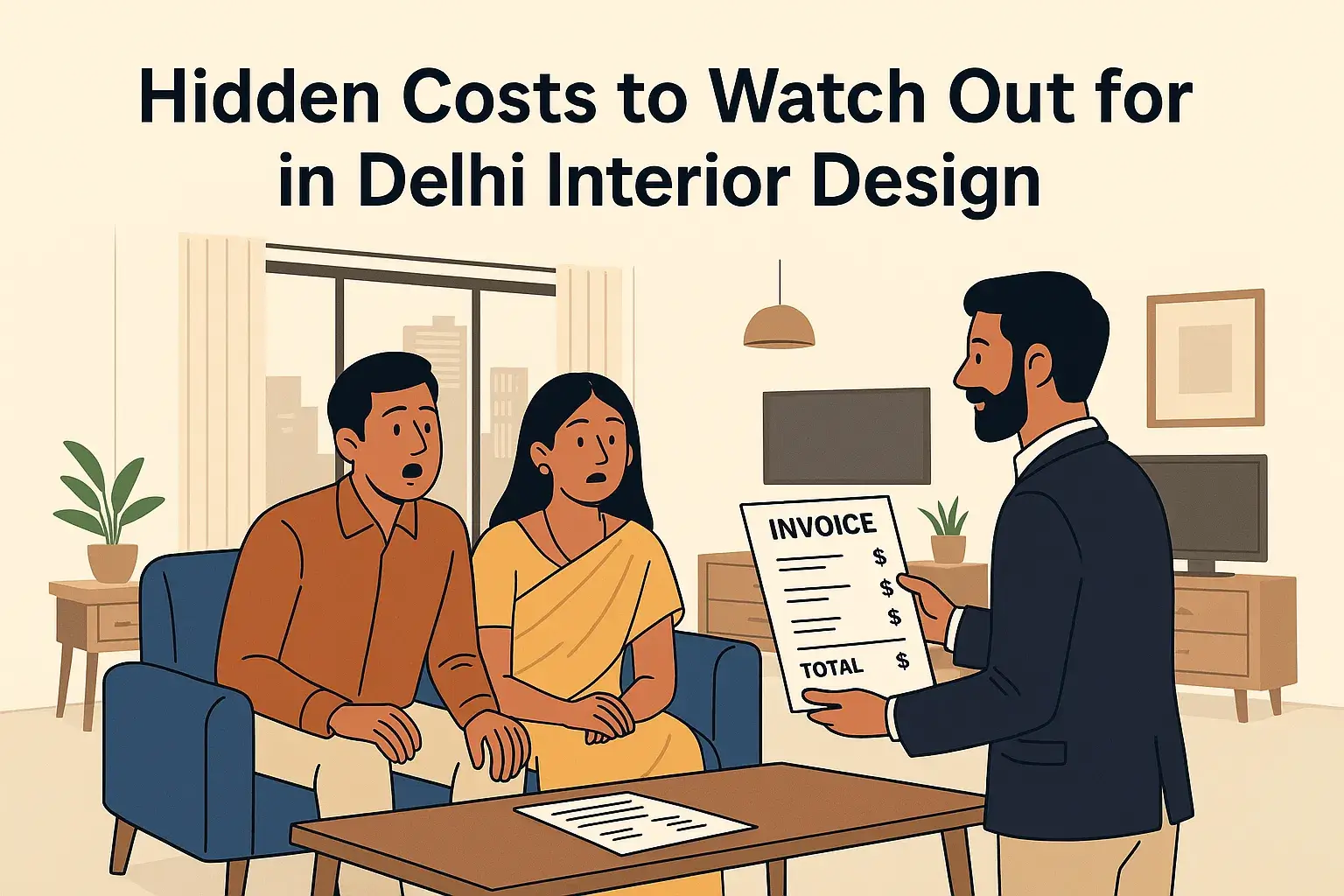
You’ve found the perfect interior designer for your Delhi home. The vision is set, the initial quote fits your budget, and you’re ready to begin. But then, as the project progresses, you notice the final bill creeping up, leaving you wondering where all those extra charges came from.
This scenario is more common than you might think. While most interior designers in Delhi are transparent, the complex nature of home renovations means that some unexpected interior design expenses can pop up. But don’t worry this guide will walk you through the common hidden costs in Delhi’s interior design scene, empowering you to plan your finances smartly and partner with your designer effectively.
Why “Hidden Costs” Exist in Delhi’s Interior Design Projects
It’s rarely a case of malicious intent. Often, these hidden costs when hiring an interior designer stem from the baseline nature of initial quotes, which cover standard services and materials. Delhi, with its unique blend of old and new architecture, presents specific challenges: unexpected structural issues in older buildings, complex site logistics in crowded neighborhoods, and the sheer desire for customization that leads clients to choose premium, sometimes imported, materials. Understanding this landscape is the first step toward a smooth, predictable project.
The Comprehensive Checklist of Hidden Costs
Let’s break down the potential hidden costs when hiring an interior designer in Delhi that you should be aware of.
The Initial Consultation Fee
Many potential clients are surprised to learn that the first meeting might not be free. While some firms offer complimentary consultations, many reputable Delhi interior designer studios charge a fee for this initial service. This typically covers the cost of the site visit, in-depth discussion of your needs, and the creation of preliminary ideas. The good news? This fee is often adjusted against the total project cost if you decide to move forward with them.

Detailed Drawing and Technical Charges
That initial quote might only include basic layout drawings. However, a full-fledged project requires intricate plans. Costs can quickly add up for:
- Detailed electrical and plumbing layouts.
- Structural engineering blueprints for wall modifications.
- High-quality 3D rendering to visualize the final space.
- Custom furniture CAD drawings.
Always ask what level of drawing is included in your interior designer quotation.
Material Procurement & Sourcing Fees
This is one of the most significant areas where unexpected interior design expenses can occur. The designer’s initial quote is often based on good-quality, standard materials. However, if you fall in love with imported Italian marble, handcrafted Moroccan tiles, or specific custom fabrics, the cost will increase. Furthermore, many design firms add a procurement fee—a percentage on top of the material cost—for their effort in sourcing, quality checking, and coordinating delivery.
Civil Work & Structural Modifications
Most interior designers collaborate with or subcontract civil work. The true extent of this work is often only revealed once the existing layers of your home are peeled back. Be prepared for potential costs related to:
- Wall demolition or constructing new partitions.
- Floor levelling to ensure a perfect finish for your new flooring.
- Adding additional electrical points or USB outlets beyond the initial plan.
GST and Other Statutory Taxes
This is a straightforward but often overlooked cost. The 18% Goods and Services Tax (GST) is a significant addition to your total bill. It’s always there in the fine print, but many clients forget to factor it in when they first look at the quotation, leading to a sticker shock later.
👉 Also read:- Maximize Your Space: Top Small Space Design Trends for Delhi’s Urban Homes
Transportation, Logistics, and Handling Charges

Delhi is a vast metropolis, and traffic can turn a simple material pickup into a half-day affair. Logistics costs cover fuel, vehicle hire, and labour for transporting materials from markets to your site. If you live in a high-rise without a service lift, add handling charges for manually moving everything upstairs.
Customization and Last-Minute Change Charges
The charm of a custom-built home often lies in its unique, made-to-order furniture. However, a custom-sized wardrobe or a uniquely shaped console will cost significantly more than a ready-made piece. Additionally, most contracts include a clause for revision charges if you decide to make changes to a design that has already been finalized and put into production.
Project Management Fee
This fee is for the continuous supervision of your project. It covers the site manager’s visits, coordination between carpenters, electricians, and painters, and overall timeline management. While usually included in the main quote, some firms itemize it separately. It’s always good to clarify what level of supervision is provided.
Post-Completion Snagging and Maintenance Costs
Reputable firms like Kriaan Enterprises offer a warranty period on their workmanship. However, it’s crucial to understand what this warranty covers. Basic touch-ups or fixes for issues arising from normal wear and tear after handover might incur separate charges.

How to Protect Your Budget: A Smart Client’s Guide
Knowing the potential pitfalls is half the battle won. Here’s how you can protect your budget and ensure a transparent partnership.
Ask the Right Questions Before Signing
Arm yourself with a list of direct questions during your discussions. This is one of the most important questions to ask an interior designer about costs:
- “Is the consultation fee refundable or adjustable?”
- “Does this quotation include the 18% GST?”
- “What is your procurement fee on materials if I choose something different?”
- “Can you provide a detailed, line-item breakdown for potential civil work?”
- “What is the cost for each additional electrical or plumbing point?”
- “What is your policy on design revisions and change charges?”
👉 Also read:- Room-by-Room Interior Design Ideas: Transforming Every Corner of Your Delhi Home
Get Everything in Writing
A handshake isn’t enough. Insist on a detailed contract that lists all the potential charges discussed above. A clause that outlines how unforeseen civil work costs will be handled and approved is essential for avoiding disputes later. A transparent interior designer quotation is the foundation of trust.
Set Aside a Contingency Fund
No matter how well you plan, it’s wise to have a buffer. Seasoned homeowners and project managers recommend setting aside a contingency fund of 10-15% of your total project cost. This fund is your safety net for any truly unforeseen expenses, giving you peace of mind throughout the construction process.
Conclusion: An Informed Client is a Happy Client
Transparency and clear communication are the keys to a successful partnership with your designer. Knowing these potential costs isn’t about distrust; it’s about being a prepared and informed partner in creating your dream home.
Ready to start your project with a team that believes in complete transparency and detailed planning? Get a detailed, all-inclusive quotation from Kriaan, your trusted interior designers and consultants.
And for more insights on planning your perfect space, from living rooms to bedrooms, be sure to explore our pillar guide: Room-by-Room Interior Design Ideas.
👉 Looking for expert interior designers in Delhi?
Explore our complete design services – Interior design services in Delhi NCR
Frequently Asked Questions
Q: Do all interior designers in Delhi have hidden costs?
A: Not all, but many costs are situational and not included in a base quote. Reputable firms will be upfront about these potential variables from the beginning. It’s one of the key questions to ask before hiring an interior designer.
Q: What is the single biggest hidden cost in a Delhi interior design project?
A: It often varies, but the combination of unforeseen civil work and the GST on the total project value are the most common budget-busters for homeowners.
Q: Can I negotiate these hidden costs?
A: Some costs, like procurement fees, can sometimes be negotiated. However, statutory costs like GST are fixed. The best approach is to understand them upfront and budget for them accordingly.