
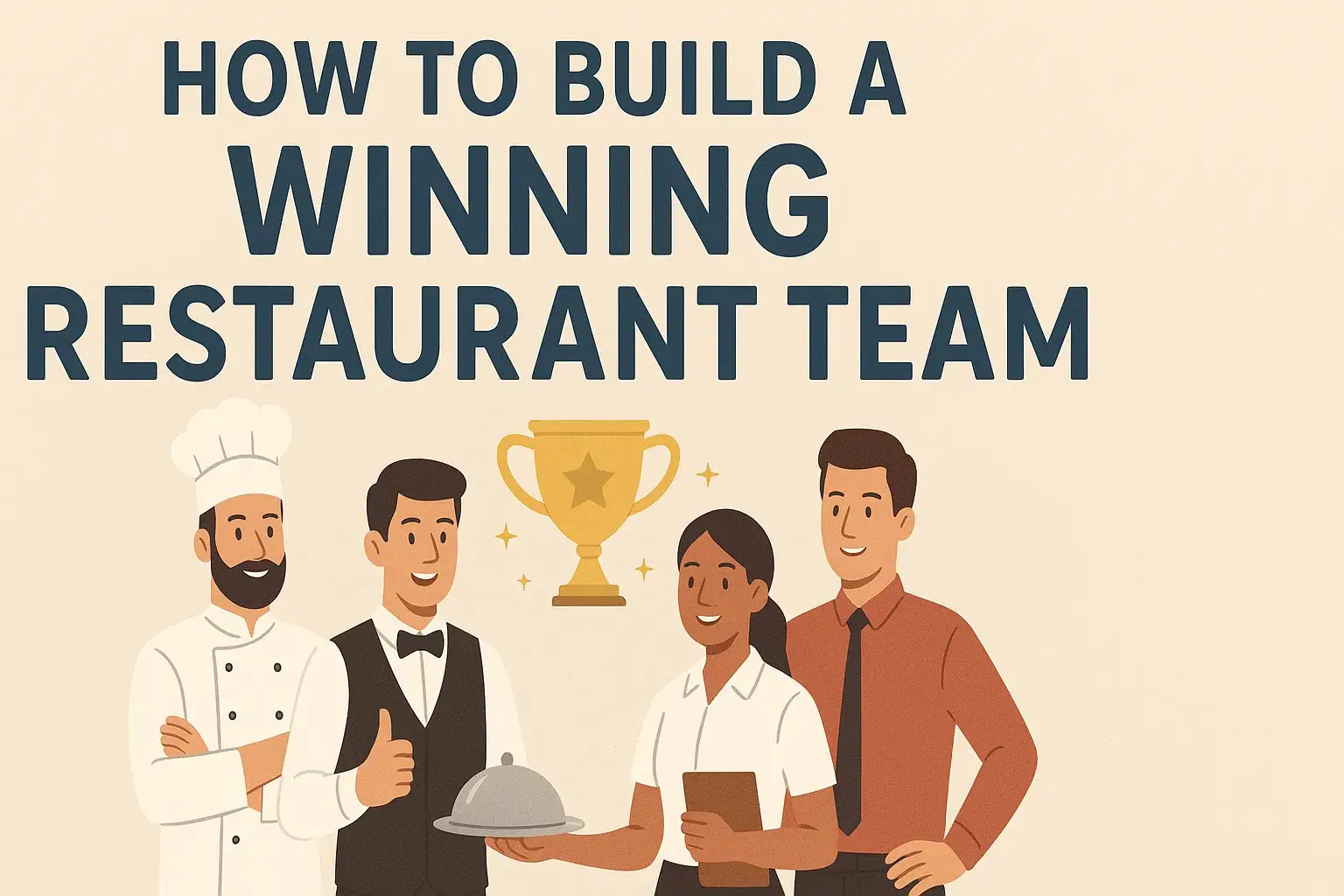
Imagine a perfect Saturday night service: the dining room is buzzing, every table is full, and the kitchen is a symphony of coordinated action. Orders go out on time, guests are laughing, and your staff moves with confident, positive energy. This isn’t a fantasy; it’s the direct result of intentionally building a winning restaurant team.
For any restaurateur, high staff turnover is one of the most costly and frustrating challenges. But what if your employees were your greatest asset, your brand ambassadors, and the engine of your profitability? It all starts with a strategic approach. This guide breaks down the eight essential steps to build a restaurant team that is cohesive, motivated, and built to last. As a leading restaurant consultants in hospitality sector, we’ve seen these principles transform businesses time and again.
8-Step Guide to Build a Winning Restaurant Team
1. Define Your Restaurant’s Culture and Vision
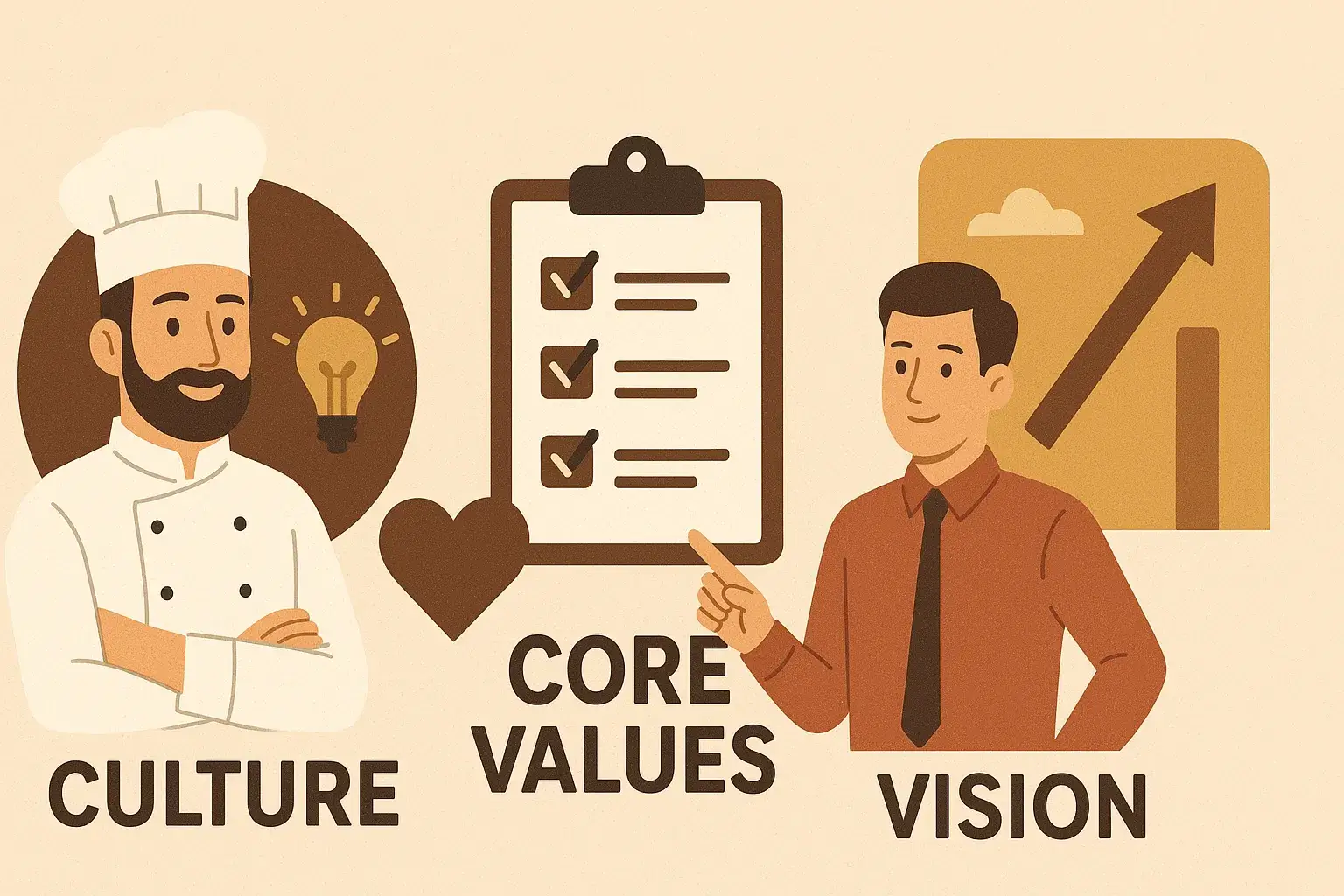
You can’t hire the right people if you don’t know who you are. Your culture is your restaurant’s personality—it’s what you stand for and the experience you promise to both guests and employees.
Craft Your Core Values
Move beyond generic words like “good service.” Define 3-5 actionable core values that guide behaviour. For example:
- Radical Hospitality: We go the extra mile to make every guest feel seen and valued.
- Meticulous Attention to Detail: Every plate, every glass, every folded napoon is perfect.
- One Team, One Dream: We support each other unconditionally; there is no “front of house vs. back of house.”
Articulate Your Vision
Where do you see the restaurant in a year? What is the ultimate guest experience? Sharing this bigger picture creates a sense of purpose and helps in defining restaurant roles clearly, ensuring everyone is rowing in the same direction.
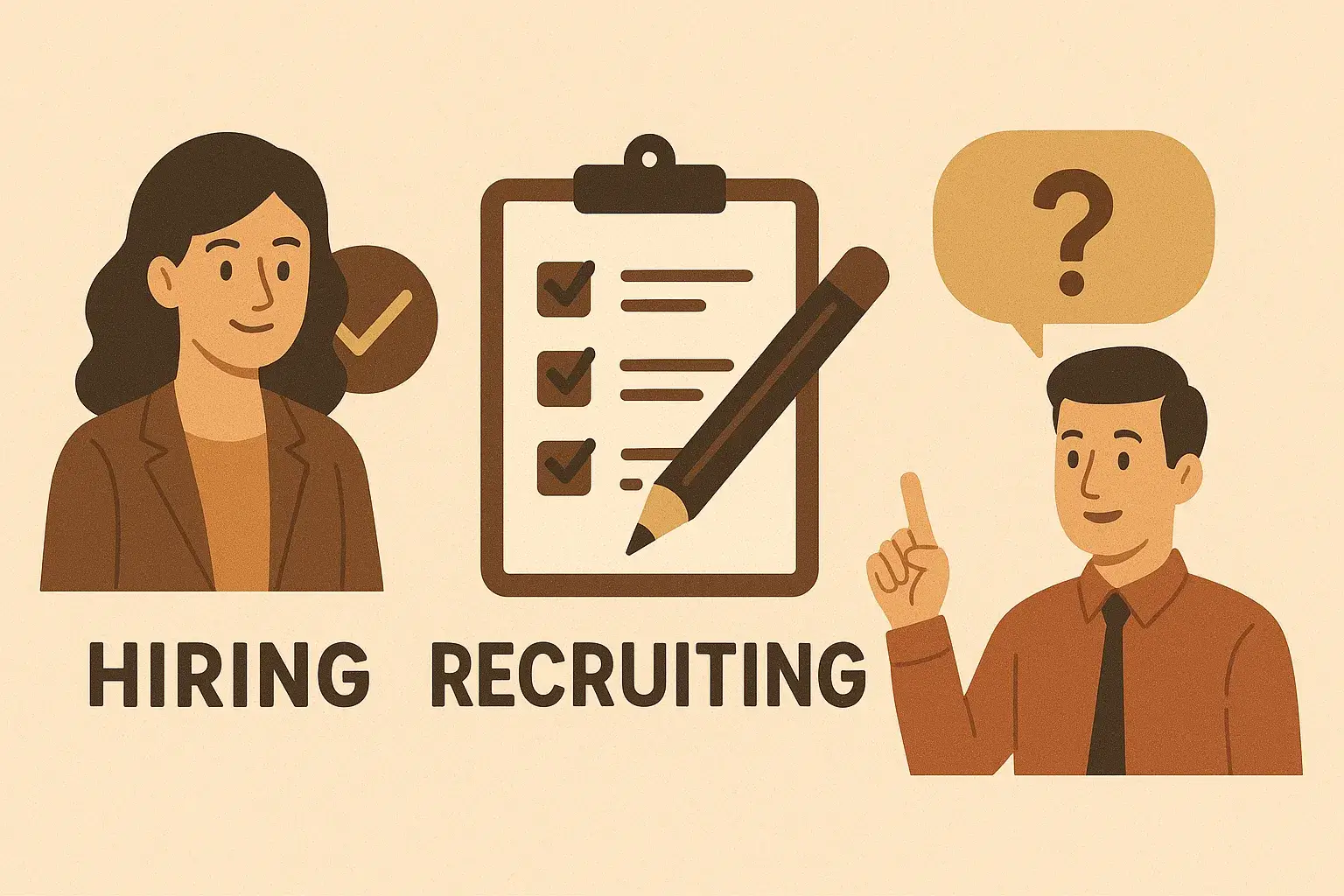
2. Master the Hiring and Recruiting Process
Shifting from filling slots to finding A-players is the most critical step in restaurant team building. Your goal is to find people who align with your culture and have the right attitude.
- Write Compelling Job Descriptions: Sell the role, don’t just list duties. Talk about your culture, your team, and the growth opportunities. Make people want to work for you.
- Look Beyond the Resume: While experience is valuable, prioritize attitude, coachability, and a passion for people. Some of the best team members can be trained if they have the right heart. Effective recruiting servers and chefs often happens through industry referrals, social media showcases of your culture, and local culinary schools.
- Ask the Right Interview Questions: Use behavioural questions to understand how they think. Instead of “Are you a team player?” ask, “Tell me about a time you had to help a struggling coworker during a rush. What did you do?” Preparing specific interview questions for restaurant staff helps you uncover their true character.
3. Implement a Structured Onboarding Program
A new hire’s first few days set the tone for their entire tenure. A messy, unstructured start leads to confusion and early turnover. A great welcome fosters loyalty.
- Create a “Welcome to the Team” Kit: A simple gesture goes a long way. Include a clean uniform, a detailed training manual, their schedule, and maybe a branded water bottle or a free meal voucher.
- Assign a Mentor or Buddy: Never throw a new hire to the wolves. Pair them with a seasoned, positive star employee who can train them, answer questions, and be their first friend on the team.
- Outline Clear Expectations: Use a checklist for their first week. This structured onboarding process ensures they learn everything from how to use the POS system to the ingredients in your most popular dish, making them feel confident and supported from day one.
4. Invest in Continuous Training and Development
Training shouldn’t end after the first week. Continuous learning is what keeps your team engaged, sharp, and at the top of their game. This is a core principle we emphasize in our restaurant staff training strategies.
- Develop Standard Operating Procedures (SOPs): How do you want the host to answer the phone? What is the exact method for polishing glassware? SOPs remove guesswork and ensure consistency. Knowing how to create a training manual for a restaurant is key to scaling your quality and efficiency.
- Host Regular Training Sessions: Make learning fun and ongoing. Host weekly tastings of new menu items or special wines, run role-playing sessions for handling difficult guests, and offer workshops on upselling techniques. This shows your team you are invested in their growth.
5. Foster Open and Effective Communication
Miscommunication is the root of almost every service mishap in a restaurant. Creating channels for clear, respectful dialogue is non-negotiable for a smooth operation.
- Hold Pre-Shift Huddles: This 5-minute meeting is not for reprimanding, but for aligning. Go over the game plan, daily specials, VIP reservations, and most importantly, to energize the team. It’s a crucial pulse-check for the shift.
- Create Feedback Channels: Effective communication in restaurants is a two-way street. Maintain an open-door policy, conduct anonymous quarterly surveys to hear honest feedback, and schedule brief one-on-one check-ins to understand your team’s aspirations and concerns.
6. Empower and Motivate Your Team
An empowered employee takes ownership of their role and provides genuinely excellent service. They stop being “just staff” and become partners in your success.
- Delegate and Trust: Give your key staff members real responsibility. Let your passionate bartender design a new cocktail menu. Allow a senior server to lead the pre-shift meeting. This builds leadership skills and shows trust.
- Recognize and Reward Excellence: Team motivation thrives on appreciation. Implement an “Employee of the Month” program with a prime parking spot or a bonus. Offer spot bonuses for teams that get mentioned by name in great reviews. Most importantly, give genuine, public praise for a job well done.
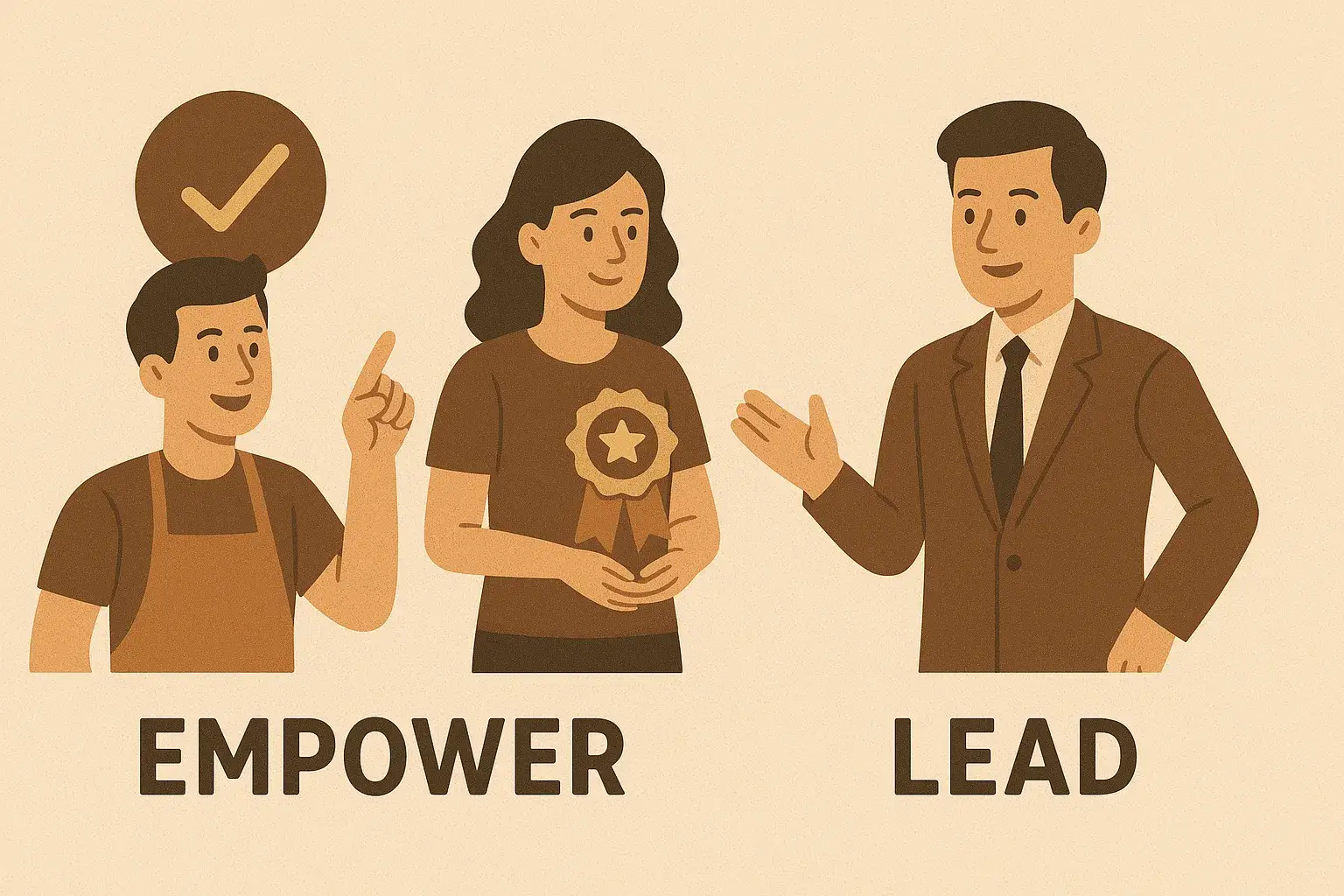
7. Lead by Example with Strong Restaurant Leadership
The energy of the leader is the ceiling for the team. You cannot expect a positive, hard-working, and respectful team if you don’t model that behavior yourself.
- Be a Player-Coach: The best restaurant leadership is hands-on. Don’t just bark orders from the pass. During a rush, jump in to run food, help the host seat guests, or grab a towel to help bus a table. Your team will respect you immensely for it.
- Handle Conflict Fairly and Quickly: When issues arise between staff members, address them directly, privately, and fairly. Allowing gossip and resentment to fester will poison your culture. Be the calm, professional mediator who focuses on solutions.
8. Prioritize Employee Retention
It is far cheaper and easier to keep a fantastic employee than to constantly recruit and train new ones. Your retention strategy is your secret weapon.
- Offer Competitive Compensation and Benefits: This is the foundation of employee retention restaurant strategies. Regularly review your wages and tip structures to ensure they are fair and competitive. If possible, offer benefits like health insurance or paid time off. Never underestimate the power of a fantastic, free family meal—it’s a cornerstone of culture.
- Create a Path for Growth: Show your team a future. Map out how a server can become a trainer, then a shift lead, and then a manager. Support their desire to learn and advance. When people see a future with you, they are far less likely to leave. This is the ultimate answer to how to reduce turnover in my restaurant.
Conclusion: Your Team is Your Greatest Investment
Building a winning restaurant team isn’t a one-off project; it’s an ongoing process of nurturing, investing, and leading. It starts with a clear culture, is built through meticulous hiring and training, and is sustained through empowering leadership and a genuine focus on retention.
The rewards are immense: lower turnover costs, legendary guest experiences, and a workplace that people are proud to be a part of.
Feeling overwhelmed by the challenge? You don’t have to build your dream team alone. Our team of expert restaurant consultants in Delhi specializes in helping owners like you create thriving cultures and operational excellence. We provide hands-on support with everything from hiring systems to leadership training.
For more insights on crafting the perfect service sequence, check out our previous article: The Ultimate Pre-Opening Checklist for Restaurants in India.
Ready to turn your staff into your strongest competitive advantage? Schedule consultation with us today
Frequently Asked Questions (FAQs)
Q1: What is the most important step in building a restaurant team?
While all steps are important, it all starts with defining your culture and vision. You can’t hire the right people or set clear expectations if you don’t know what your restaurant stands for. This is the foundational step that guides everything else.
Q2: How can I find good staff in the competitive restaurant industry?
Look beyond traditional job boards. Leverage industry referrals from your current top performers, use social media to showcase your positive work culture, and build relationships with local culinary schools to tap into new talent.
Q3: What’s one simple way to improve employee retention?
Recognize and reward your team consistently. Simple, genuine praise in front of peers, small spot bonuses for great work, or an “Employee of the Month” program can dramatically boost morale and make people feel valued.
Q4: How long should the onboarding process last?
A structured onboarding process should be very hands-on for at least the first week. However, continuous training and support should extend for 30-90 days to ensure an employee is fully confident and integrated into the team.
Q5: I’m a hands-on owner. Why do I need formal SOPs?
Standard Operating Procedures (SOPs) ensure consistency and quality, especially when you’re not there. They are essential for training new hires efficiently and maintaining your standards across all shifts, which is key to building a reliable team.
Q6: What if I can’t afford to offer higher wages or benefits?
While competitive pay is crucial, a positive restaurant culture is a huge retention tool. Focus on creating a respectful, fun, and supportive environment, offer flexible scheduling where possible, and provide a great family meal. People often stay for a great boss and team, even if the pay is just market rate.
Q7: How often should I communicate with my entire team?
Daily pre-shift huddles are essential for daily alignment. For deeper communication, aim for brief quarterly one-on-one check-ins with key staff and anonymous surveys to gather honest feedback on a regular basis.