

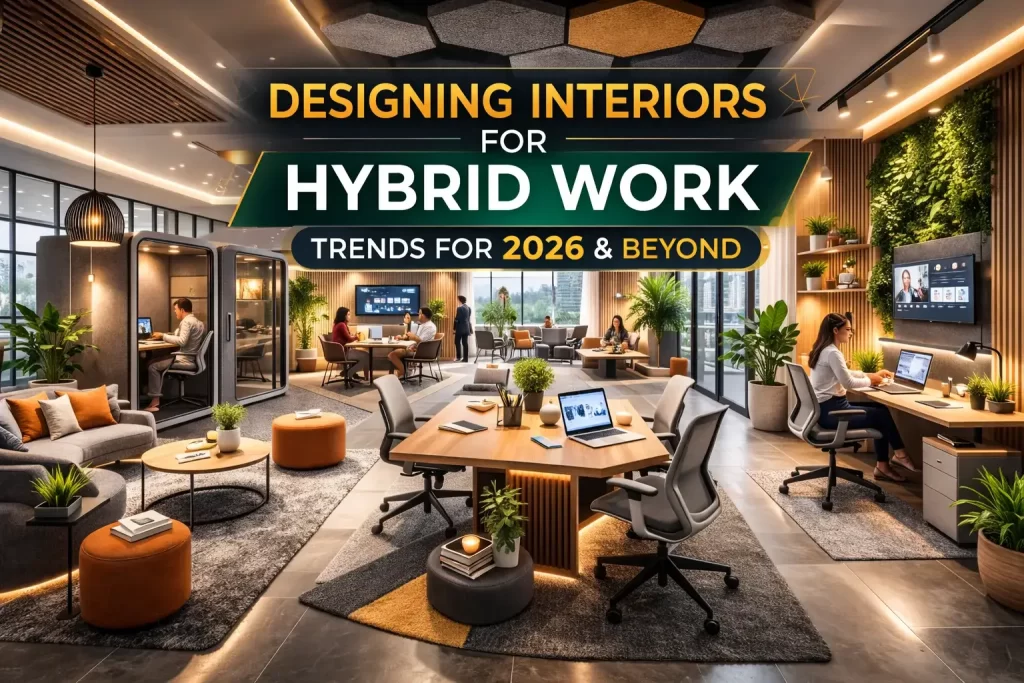
Do you know workplace has completely changed. Hybrid work is no longer an experiment; it’s the new operating model for companies Globally. As employees split time between home and office, interior design must evolve to support flexibility, productivity, wellbeing, and collaboration.
In 2026 and beyond, hybrid work interior design will no longer be about adding a desk at home or redesigning a conference room. It will be about creating fluid environments that adapt to shifting work styles.
This guide explores the future of hybrid workspace design, emerging office trends, smart home office strategies, and practical insights you can apply immediately.
What Is Hybrid Work Interior Design?
Hybrid work interior design mainly focuses on creating smooth environments—both for residential and commercial—that support remote and in-office work seamlessly.
It combines:
- Flexible layouts
- Ergonomic furniture
- Acoustic privacy solutions
- Smart technology integration
- Wellness-centered elements
- Multi-purpose space planning
The goal? To ensure employees remain productive whether working from home, collaborating onsite, or toggling between the two.
Why Hybrid Workspaces Matter More Than Ever in 2026
Several factors are driving demand for hybrid-friendly interiors:
| Factor | Impact on Design |
| 3–4 day in-office schedules | Offices need collaboration hubs instead of fixed desks |
| Remote productivity expectations | Homes must support professional-grade work setups |
| Employee well-being focus | Spaces must reduce stress and digital fatigue |
| Gen Z workforce rise | Demands tech integration and creative environments |
| Cost efficiency for companies | Smaller offices, smarter layouts |
Businesses that fail to adapt risk lower productivity and talent retention issues.
Key Hybrid Interior Design Trends for 2026
Let’s explore the major interior trends shaping hybrid environments.
1. Activity-Based Workplace Design
Instead of assigned desks, offices are shifting toward activity-based working (ABW) models.
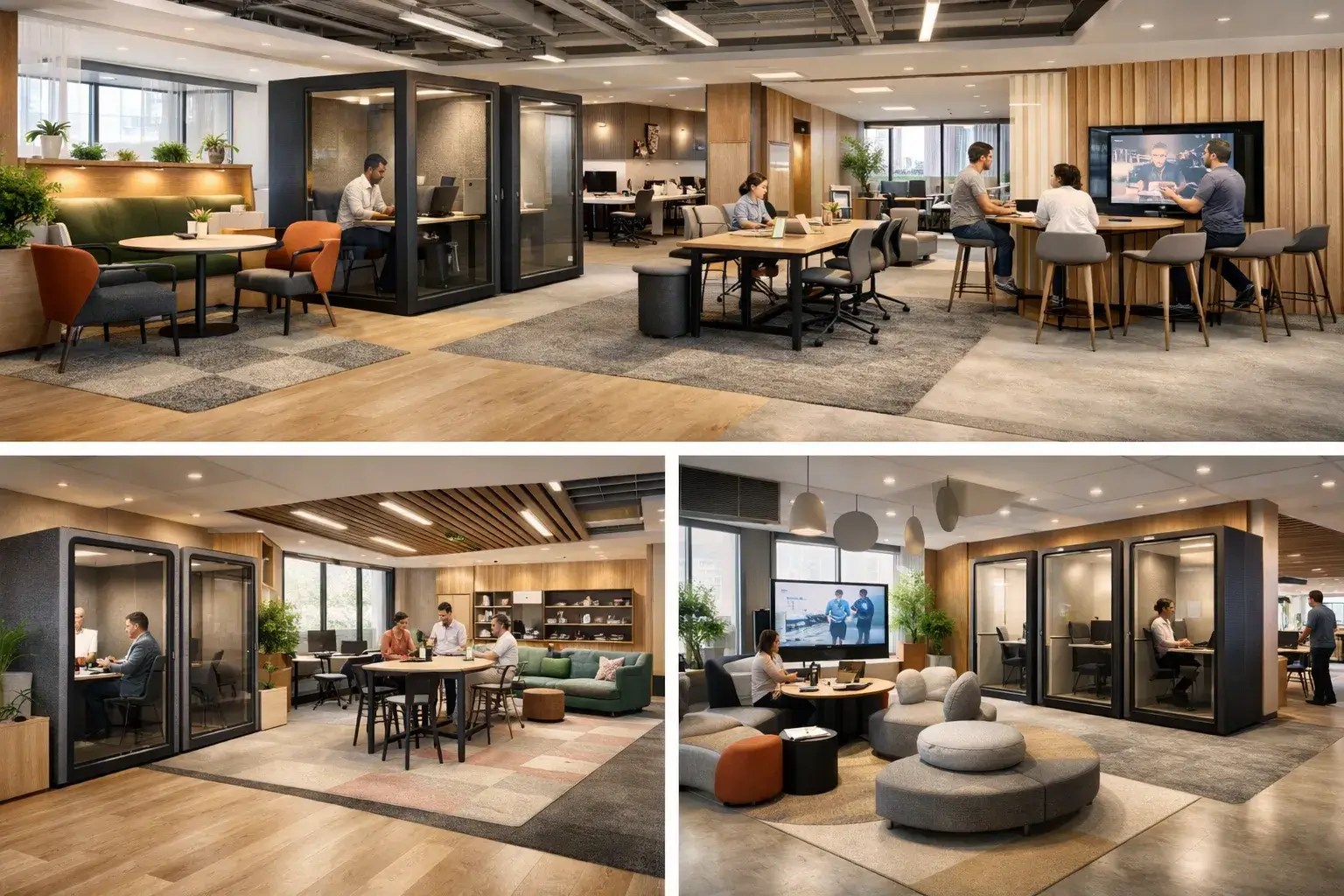
What It Includes:
- Focus pods for deep work
- Collaboration lounges
- Quiet rooms
- Standing meeting corners
- Flexible hot-desking zones
Also read:- How the Interior Design Industry Is Evolving in India | Trends & Insights
2. Advanced Home Office Integration
The temporary “work-from-dining-table” era is over.
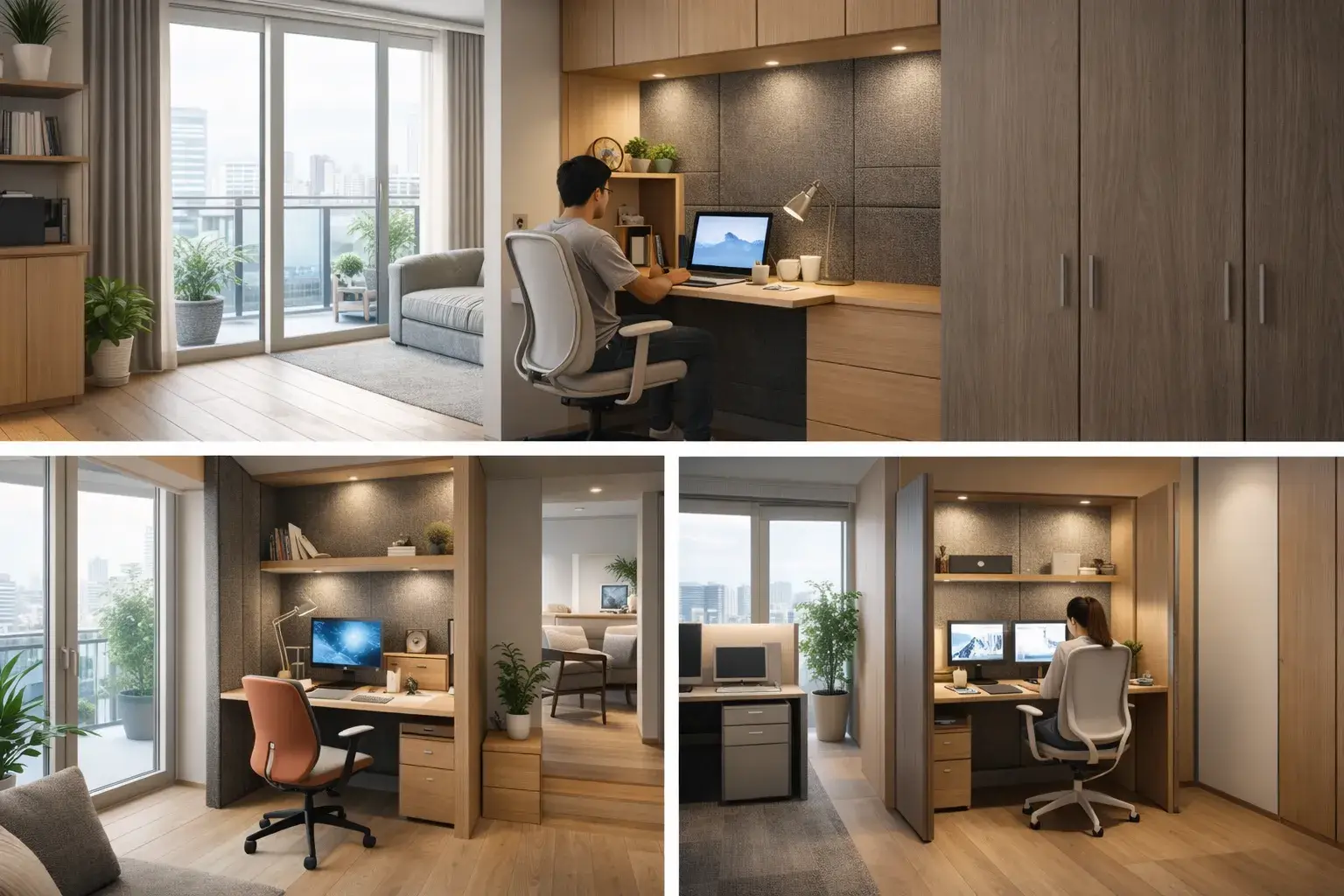
Home office interior design in 2026 focuses on:
- Built-in foldable desks
- Acoustic wall panels
- Concealed cable management
- Dual-purpose furniture
- Vertical storage solutions
Design Insight:
Urban apartments require space-efficient workstations that blend into interiors when work hours end.
3. Biophilic Hybrid Design Beyond Plants
Biophilic design isn’t just about adding greenery.
2026 Evolution:
- Natural textures (stone, cork, clay plaster)
- Indirect daylight simulation lighting
- Indoor air quality monitoring
- Soundscapes mimicking nature
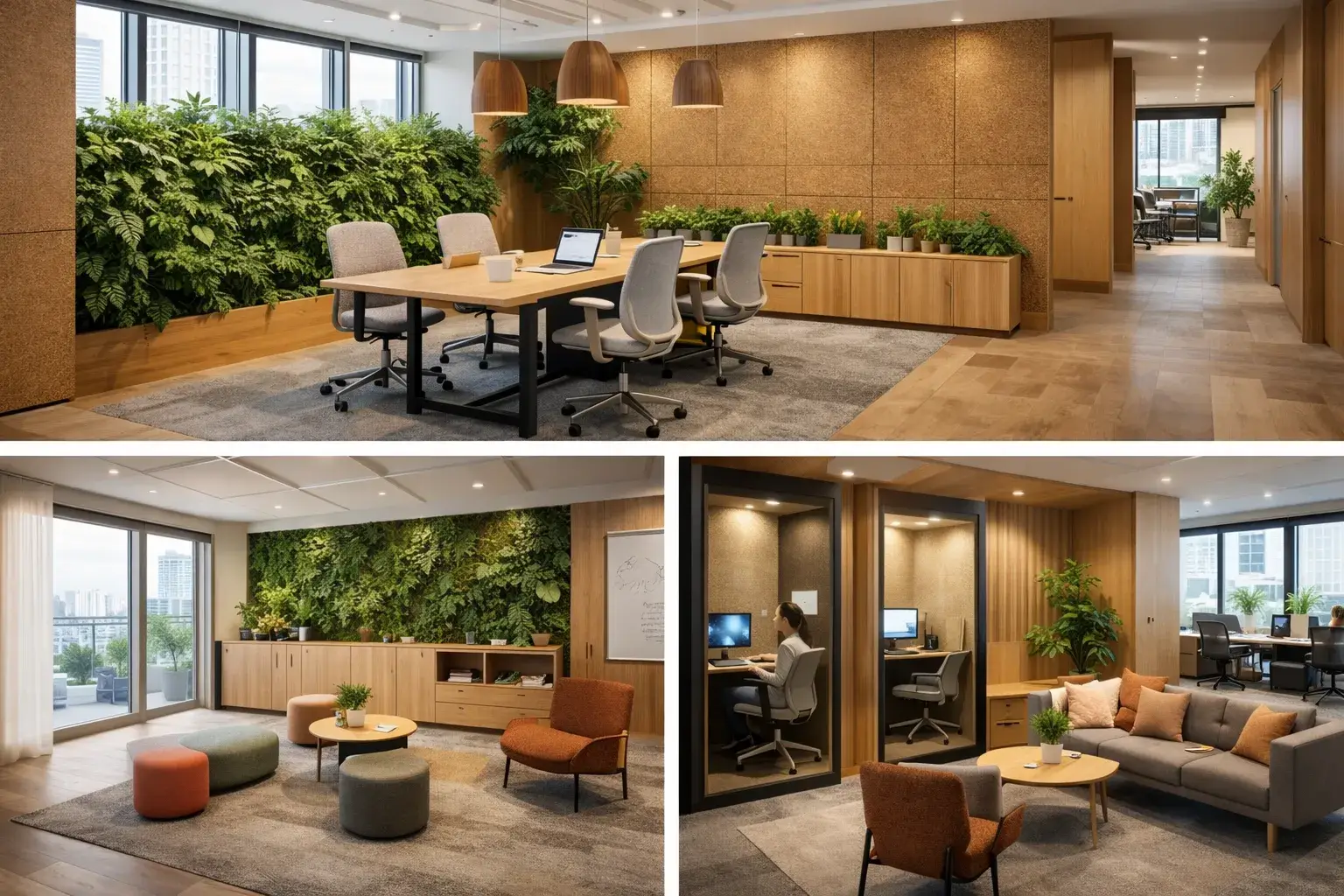
Research indicates exposure to natural elements improves productivity and reduces stress. Hybrid spaces now emphasize sensory comfort.
Actionable Tip:
In home offices, replace synthetic laminate desks with engineered wood or natural veneer finishes for warmth and reduced glare.
4. Smart Technology & AI Integration
Technology is becoming invisible yet powerful.
Hybrid Tech Must-Haves:
- Smart lighting systems
- Voice-controlled blinds
- Automated climate zones
- AI meeting room booking panels
- Wireless charging work surfaces
This creates an efficient, frictionless workflow across environments.
Also read:- How to Choose the Best Interior Designer in Gurgaon (Complete Guide)
5. Acoustic-First Design
Noise is the biggest productivity killer in hybrid environments.
Solutions Trending in 2026:
- Felt acoustic ceiling baffles
- Upholstered partition panels
- Double-glazed sliding doors
- Soft flooring materials
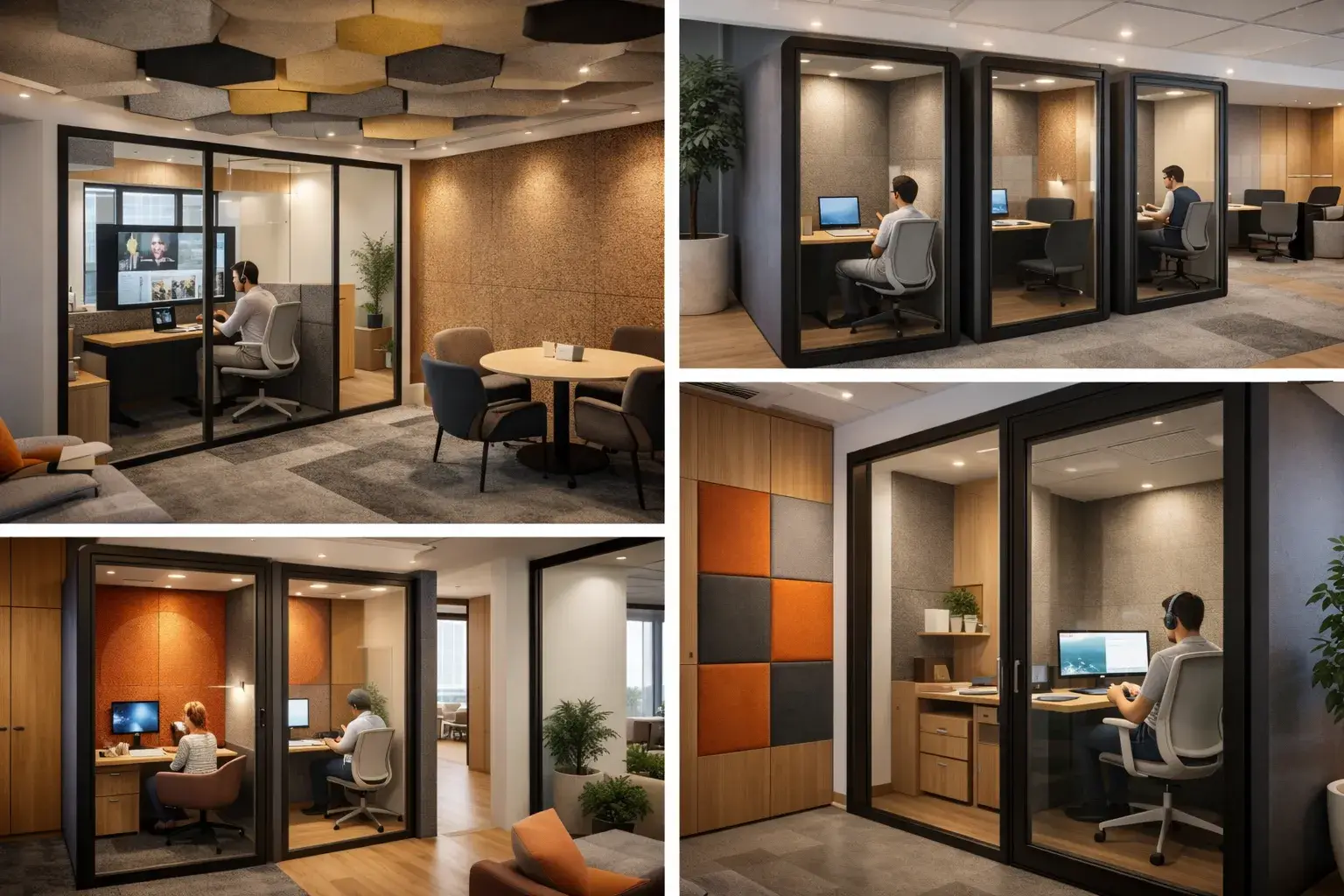
Hybrid work demands video calls. Poor acoustics lead to fatigue.
Pro Tip:
Use a combination of:
- Soft textiles
- Rugs
- Fabric wall panels
This absorbs echo without compromising aesthetics.
6. Wellness-Centered Interiors
Wellness is now a design mandate, not a luxury.
Hybrid interior trends include:
- Sit-stand desks
- Circadian lighting systems
- Ergonomic chairs
- Stretching corners in offices
- Meditation niches at home
Why This Is important
Employees working in hybrid models face:
- Longer screen time
- Blurred work-life boundaries
- Reduced physical movement
Thoughtful design counters burnout.
7. Flexible, Modular Furniture
Furniture must adapt quickly.
| Furniture Type | Why It Matters |
| Foldable desks | Space efficiency |
| Stackable chairs | Quick reconfiguration |
| Mobile storage units | Flexible organization |
| Modular sofas | Collaboration adaptability |
Hybrid offices cannot remain static.
Designing Hybrid Spaces: Residential vs Commercial
Residential Hybrid Design Priorities
- Compact efficiency
- Aesthetic blending
- Storage innovation
- Sound control
Commercial Hybrid Design Priorities
- Collaboration optimization
- Flexible seating ratios
- Tech infrastructure
- Employee wellness
A cohesive strategy ensures both environments support productivity equally.
How to Plan a Hybrid Workspace (Step-by-Step)
Here’s a practical approach:
Step 1: Analyze Work Patterns
- Remote vs office days
- Meeting frequency
- Focus-heavy roles
Step 2: Define Zones
Create:
- Quiet zones
- Collaboration zones
- Relaxation zones
Step 3: Invest in Ergonomics
Don’t compromise on:
- Chair lumbar support
- Desk height
- Monitor alignment
Step 4: Improve Acoustics
Measure decibel levels and add absorption where needed.
Also read:- Showroom Interior Design Tips for Noida Businesses (2026 Guide)
Step 5: Integrate Smart Lighting
Use adaptable lighting temperatures:
- Cool white for work
- Warm white for evening relaxation
Future-Proofing Hybrid Interiors Beyond 2026
Future trends point toward:
- Mixed Reality (AR/VR) collaboration zones
- Smart glass partitions
- Carbon-neutral office interiors
- Ultra-personalized workspace settings
Hybrid work interior design is evolving into adaptive architecture.
Common Mistakes to Avoid
- Designing purely for aesthetics without function
- Ignoring cable management
- Underestimating acoustic needs
- Overloading with tech without simplicity
- Forgetting natural light optimization
Smart planning ensures long-term ROI.
Build Smarter Work Environments with Kriaan
If you’re planning to transform your workspace for the hybrid era, partnering with experienced professionals makes all the difference. At Kriaan Enterprises , we specialize in designing intelligent, future-ready interiors that seamlessly blend flexibility, technology, aesthetics, and functionality. Whether it’s a compact home office, a collaborative corporate environment, or a full-scale commercial transformation, our team focuses on ergonomic planning, acoustic comfort, biophilic elements, and smart integration tailored to your business needs.
With a strong presence across Delhi NCR and major Indian cities, Kriaan Enterprises delivers customized interior solutions that are both visually compelling and strategically designed for productivity in the evolving world of hybrid work.
Conclusion
Hybrid work is not temporary—it defines the next decade of interior design. Whether designing a home office or corporate environment, the focus must remain on flexibility, wellness, and smart adaptability.
The future belongs to interiors that respond intelligently to human needs.
Frequently Asked Questions (FAQs)
1. What is hybrid workspace design?
Hybrid workspace design is an interior strategy that supports both remote and in-office work through flexible layouts, ergonomic furniture, acoustic solutions, and smart technology integration.
2. How do you design a small hybrid home office?
Use foldable desks, vertical storage, sound-absorbing panels, ergonomic seating, and concealed cable systems to maximize functionality within limited space.
3. Why is acoustic design important in hybrid offices?
Hybrid environments rely heavily on virtual meetings. Poor acoustics cause distractions, lower productivity, and video call fatigue.
4. What furniture works best for hybrid workspaces?
Modular, mobile, ergonomic, and height-adjustable furniture ensures flexibility and long-term usability.
5. How can companies reduce office space in hybrid models?
By implementing activity-based workplace design, hot-desking, modular layouts, and shared collaboration zones.
6. Is biophilic design necessary for hybrid interiors? Yes. Natural materials, improved ventilation, and greenery enhance mental health and productivity.